
- Halal investing for beginners
How Teenagers Can Start Investing Today
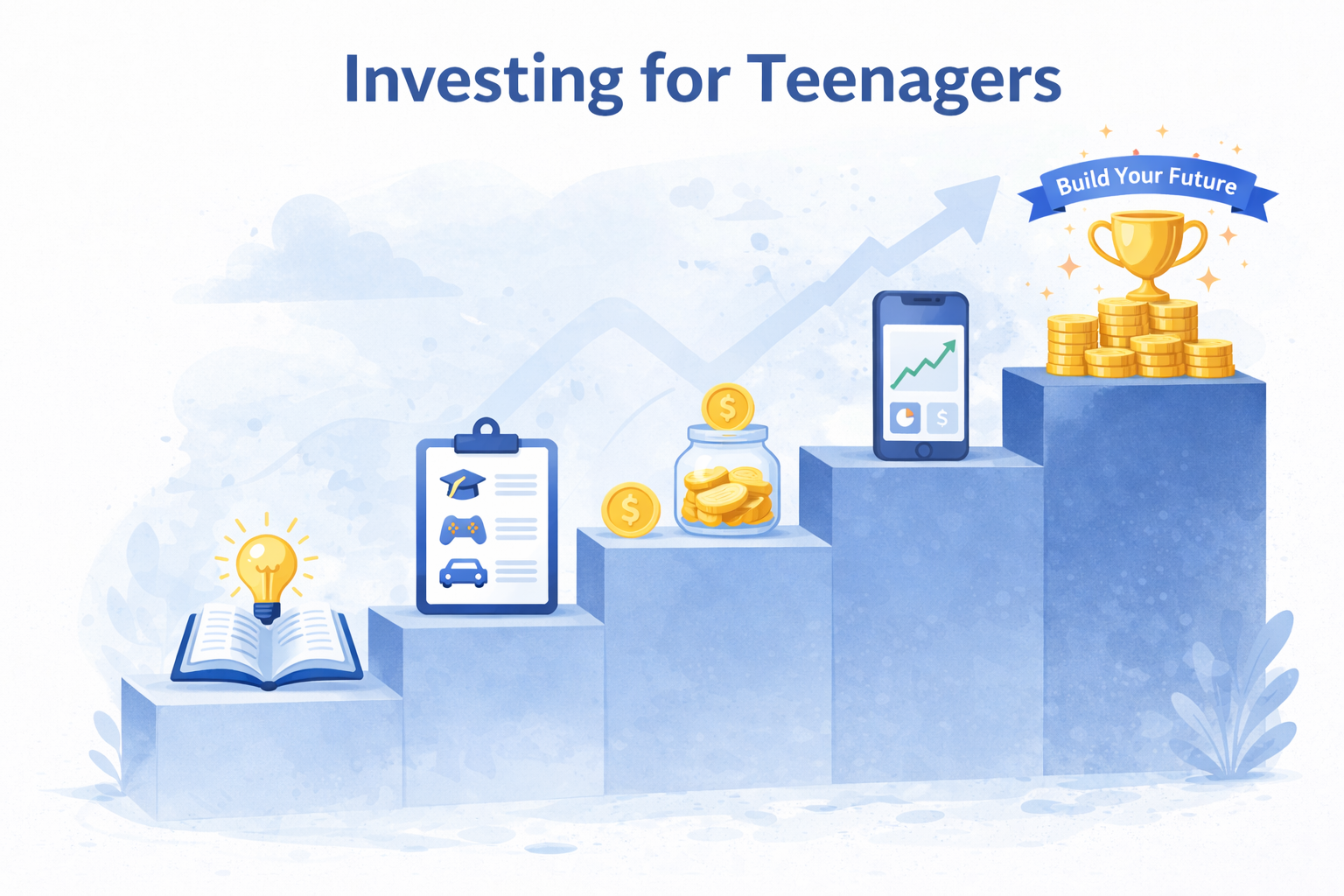
Start Young, Grow Strong: A Practical Guide for Teen Investors
Table of Contents
- Introduction
- Step 1: Understand What Investing Really Means
- Step 2: Learn Before You Invest
- Step 3: Start Small - Even With $5
- Step 4: See How Time Multiplies Your Money
- Step 5: Choose the Right Type of Investment
- Step 6: Create a Simple Plan
- Step 7: Use Technology Wisely
- Step 8: Think Long-Term, Not Overnight
- Step 9: Learn From Mistakes, Not Fear Them
- Conclusion
- References & Resources
Introduction
A lot of teenagers believe investing is something you only start thinking about later in life - when you have a full-time job, a stable income, and “enough” money.
But that idea couldn’t be further from the truth.
In reality, the best time to start investing is as early as possible. Not because you have more money — but because you have more time. And in investing, time is the most powerful advantage you can have.
Even small amounts, invested consistently, can grow into something meaningful thanks to compound interest. What feels like pocket money today can become real financial security in the future.
This guide will walk you through how teenagers can start investing today - in a simple, safe, and smart way.
Step 1: Understand What Investing Really Means
At its core, investing means putting your money into something with the expectation that it will grow over time.
Instead of letting your money sit idle, you use it to buy assets like:
- stocks
- bonds
- funds
that have the potential to increase in value or generate income.
The key idea is simple: your money starts working for you.
Unlike saving, which focuses on safety, investing is about growth, and with growth comes some level of risk. That’s completely normal.
One of the most important concepts to understand early is compound interest - where your earnings start generating their own earnings. Over time, this creates a powerful snowball effect.
Investing isn’t about getting rich quickly. It’s about building something steadily.
For teenagers, just understanding this mindset is already a huge step toward financial independence.
Step 2: Learn Before You Invest
Before putting real money into the market, take time to understand how things work.
Think of it this way: you wouldn’t drive a car without learning the rules first - investing is no different.
Start with the basics:
- what stocks and ETFs are
- how the stock market works
- what risk vs reward means
- how diversification protects your money
There are plenty of beginner-friendly resources today - from books and YouTube channels to free online courses.
It’s also important to understand your why:
- Are you saving for college?
- A future business?
- Or long-term financial freedom?
Your goal will shape your strategy.
The more you learn, the more confident you’ll feel. And confidence leads to better decisions.
Step 3: Start Small - Even With $5
One of the biggest myths about investing is that you need a lot of money.
You don’t.
Today, many platforms allow you to start with just a few dollars. What matters more than the amount is consistency.
Here are some beginner-friendly options:
| App | Best For | Minimum | Why It’s Useful |
|---|---|---|---|
| Akinda.io | Learning + practice | Free | Education + simulator before real investing |
| Acorns Early | Small automatic investing | $5 | Helps invest spare change |
| Fidelity Youth Account | Real investing (13+) | $0 | Parent-supervised + free tools |
| Greenlight | Spending + investing | $1 | Great for money habits |
The goal isn’t to invest big, it’s to start early and stay consistent.
Step 4: See How Time Multiplies Your Money
Let’s make this real.
If a teenager starts investing early, time does most of the heavy lifting.
- Starting at 16 years old with just $20/month
- Average return: 8% annually
By age 40 → around $16,000+
Now compare that:
- Starting at 25 → ~$7,500
- Starting at 30 → ~$5,000
Same amount. Same effort. The only difference? Time.
This is why investing early matters more than investing big.
Step 5: Choose the Right Type of Investment
Not all investments are the same, and that’s a good thing.
As a beginner, especially as a teenager, it’s better to start simple.
Here are the main options:
- 1. Stocks
You own a small part of a company. Higher potential returns, but also higher risk. - 2. ETFs (Exchange-Traded Funds)
A mix of many stocks or bonds in one place. Great for diversification and beginners. - 3. Mutual Funds
Professionally managed portfolios. Good for long-term investing. - 4. Savings Accounts / CDs
Very safe, but lower returns. - 5. Crypto (with caution)
High risk, high volatility. Only explore with small amounts and proper research.
Start with what feels manageable. As you learn more, your strategy can evolve.
Step 6: Create a Simple Plan
A simple plan is what separates random investing from smart investing.
Start by asking yourself:
- How much can I invest monthly?
- What is my goal?
- How long can I stay invested?
Then build a routine:
- invest weekly or monthly
- keep it consistent
- don’t overcomplicate
You don’t need dozens of investments. A simple, clear plan that you follow consistently is far more powerful.
Step 7: Use Technology Wisely
Today’s teenagers have something previous generations didn’t - powerful financial tools in their pocket.
Apps like Akinda, Greenlight, and Fidelity Youth make investing:
- easier
- more visual
- more educational
For example, Akinda helps you:
- learn step-by-step
- screen halal stocks
- analyze risk
- practice investing with simulators
- Ai advisor
- track your progress
It’s like having a personal finance coach - but in your phone.
Step 8: Think Long-Term, Not Overnight
One of the biggest mistakes beginners make is expecting fast results. But investing doesn’t work like that.
Markets go up and down every day. That’s normal. What matters is what happens over years, not days.
If you stay consistent, your small investments today can grow into something meaningful in the future.
Investing is not a sprint - it’s a marathon.
Step 9: Learn From Mistakes, Not Fear Them
Every investor makes mistakes. That’s part of the process.
Maybe you:
- bought too early
- sold too fast
- followed hype
It happens. The key is not to quit, but to learn.
Each mistake teaches you something valuable. Over time, those lessons turn into better decisions.
Conclusion
Teenagers today have something incredibly powerful: time + access + information.
You don’t need to be rich to start investing.
You just need to start.
Every small investment you make today is a step toward:
- financial independence
- better opportunities
- long-term security
Start small. Stay consistent. Keep learning.
By the time others begin thinking about money, you’ll already understand how to grow it.
Ready to take your first step?
Start learning and practicing with Akinda today.
Even $5 can be the beginning of something big.
References & Resources:
- Malkiel, B. G. (2019). A Random Walk Down Wall Street
- Investopedia (2024). How Teens Can Start Investing
- Forbes Advisor (2025). Best Investment Accounts for Minors
- Warren Buffett (2023). Letter to Shareholders
Keywords: teen investing, how teenagers can start investing, investing for teens, beginner investing guide for students, how to invest money as a teenager, investing with little money, compound interest explained, financial literacy for teens, youth investing apps, how to start investing early