
- Stock Market & Equities
How to Invest in Stocks with Just $50?
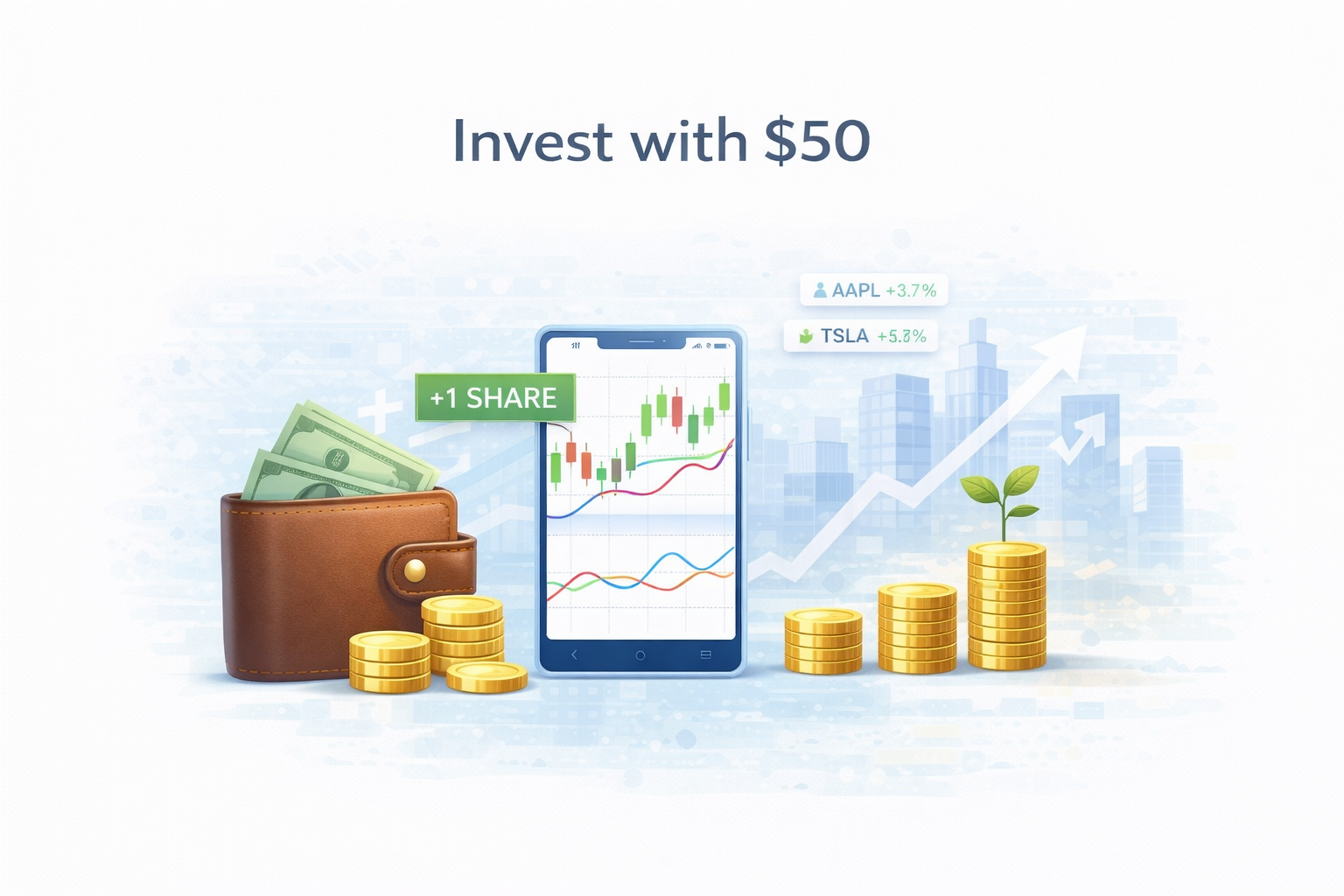
Table of contents:
- Introduction
What Are Stocks and Why Do They Matter?
Start Small and Stay Consistent
Choose the Right Investing Platform
Decide What to Invest In With $50
Build a Consistent Investing Habit
Manage Expectations and Practice Patience
Expand Your Investing Knowledge
Moving Beyond $50
Key Takeaways
Final Thoughts
Introduction
Investing in the stock market used to be considered a privilege reserved for the wealthy or financial professionals. Today, however, technological innovation and financial inclusion have made it possible for anyone to start investing—even with just $50. Whether you’re a student, a young professional, or simply curious about finance, understanding how to invest small amounts can set a strong foundation for your financial future.
What Are Stocks and Why Do They Matter?
A stock represents ownership in a company. When you buy a share, you own a small piece of that business. This ownership gives you the potential to earn money in two main ways:
1. Capital Gains – If the price of the stock increases, you can sell your shares for a profit.
2. Dividends – Some companies distribute a portion of their profits to shareholders.
Stocks are a crucial part of the financial system because they connect individual investors with businesses that need capital. They also allow everyday people to participate in economic growth.
Example:
Imagine you invest $50 in a technology company’s stock, and over one year, the stock increases by 20%. Your $50 becomes $60. If the company pays a 2% dividend, you earn an extra $1, bringing your total to $61. Over time, even small investments like this can grow significantly.
Start Small and Stay Consistent
Starting with $50 may not seem life-changing, but it’s an essential first step. Every successful investor began somewhere small. The key is consistency, patience, and discipline.
The power of compounding is what makes small, regular investments powerful. Compounding allows your earnings to generate more earnings over time just like small sapling grows into a big tree.

Source: Freepic.com.
Example of Compounding:
If you invest $50 every month at an average annual return of 8%, in 10 years, you could have around $9,000—even though your total contributions were only $6,000.
Starting small also helps you:
- Learn how markets function without taking large risks.
- Build confidence in managing your finances.
- Develop positive money habits that last a lifetime.
Choose the Right Investing Platform
To start investing with $50, you need a platform that supports fractional shares, which allow you to buy a portion of a stock instead of a full share. This makes expensive companies like Apple or Tesla accessible even on a small budget.
Some beginner-friendly platforms include:
- Robinhood
- Fidelity
- Charles Schwab
- Public.com
- eToro
These platforms are designed for beginners with low or no fees and easy-to-use mobile interfaces. Technological innovations have “democratized” investing by making financial markets more inclusive.
Getting Started:
1. Sign up and verify your account.
2. Link your bank account.
3. Transfer your first $50—your ticket to the investment world.
For beginners seeking an all-in-one learning and investing experience, akinda.io provides tutorials, interactive guides, and community advice to make your first investment easier and less intimidating.
Decide What to Invest In With $50
Even with just $50, you have meaningful options to start building your investment portfolio.
1. Individual Stocks
You can buy a fraction of a company you believe in, such as Apple, Microsoft, or any company you trust. Fractional shares make it possible to invest in high-priced stocks without needing a large sum of money. This allows you to own a piece of businesses you are excited about and potentially benefit from their growth.
2. Exchange-Traded Funds (ETFs)
ETFs are baskets of stocks that track an index, sector, or market. They are an excellent choice for beginners because they provide instant diversification, which spreads your risk across multiple companies instead of relying on a single stock.
Popular ETF examples include:
Vanguard Total Stock Market ETF (VTI): Holds over 4,000 U.S. stocks, offering broad exposure to the entire U.S. market.
SPDR S&P 500 ETF (SPY): Tracks the 500 largest U.S. companies, giving you access to the country’s leading firms.
iShares Core MSCI World ETF (URTH): Provides global exposure, including companies from developed markets around the world.
Vanguard FTSE Emerging Markets ETF (VWO): Focuses on emerging economies, helping diversify geographically.
According to Bodie, Kane, and Marcus (2021), ETFs are particularly effective for small investors because they reduce risk while providing exposure to a wide range of companies. They are also cost-efficient and easy to manage, making them ideal for someone starting with just $50.
Build a Consistent Investing Habit
Investing once isn’t enough—the real power comes from investing regularly. One of the most effective strategies for beginners is Dollar-Cost Averaging (DCA). This means investing a fixed amount, such as $50, every month, regardless of market conditions.
DCA helps you:
- Buy more shares when prices are low
- Buy fewer shares when prices are high
- Reduce emotional reactions to short-term market fluctuations
Automation makes it even easier to stay consistent. Most investment apps allow you to set up automatic monthly deposits, ensuring that investing becomes effortless and routine.
Even small, consistent steps can lead to significant growth over time. Communities and platforms highlight that the most important part of investing is simply starting, no matter how little you begin with. By building this habit early, you train yourself to stay disciplined and patient—two of the most important traits for long-term investment success.
Manage Expectations and Practice Patience
The stock market naturally experiences ups and downs on a daily basis. A $50 investment might temporarily drop to $48 or even lower—but this short-term fluctuation is completely normal. Market prices move in response to news, investor sentiment, and economic data, but these daily changes do not necessarily reflect the long-term value of your investments.
Over the long term, the stock market tends to rise alongside economic growth. Historical data shows that stocks have provided average annual returns of around 7% after inflation over the past century. While this growth is not guaranteed every year, history demonstrates that patience and time in the market are far more important than attempting to “time” market highs and lows.
Tips for Long-Term Success
1. Avoid Checking Your Investments Daily
Constantly monitoring small fluctuations can lead to unnecessary stress and impulsive decisions. Focus instead on your overall progress and long-term goals.
2. Focus on Long-Term Goals
Investing is a journey, not a sprint. Whether your goal is saving for retirement, building wealth, or creating a financial safety net, keeping your eyes on the long-term helps prevent emotional reactions to short-term market movements.
3. Reinvest Dividends
Dividends may seem small at first, but when reinvested, they compound over time, accelerating your wealth-building journey. Even modest contributions can grow significantly through the power of compounding.
4. Diversify and Spread Your Risk
Don’t put all your money in one stock or sector. Diversification—through ETFs, mutual funds, or a mix of individual stocks—reduces the impact of a poor-performing investment on your overall portfolio.
5. Continue Learning About Finance and Markets
The more you understand how markets operate, the more confident and effective your investment decisions become. Resources such as books, online courses, and beginner-friendly platforms provide guidance, insights, and community support to help you navigate your investment journey.
Remember, small investments made consistently, combined with patience and a long-term perspective, can grow into meaningful wealth over time. The key is to stay calm during market dips, keep contributing regularly, and trust the power of long-term growth.
Expand Your Investing Knowledge
Investing is not just about growing your money—it’s also about building financial confidence, responsibility, and a deeper understanding of the economy. The more you know, the better equipped you are to make smart decisions and navigate market fluctuations with confidence.
Ways to Improve Your Financial Knowledge:
1. Read Foundational Investment Books
Books like The Intelligent Investor by Benjamin Graham and A Random Walk Down Wall Street by Burton Malkiel offer timeless insights into investing strategies, risk management, and long-term wealth building.
2. Follow Reputable Financial News Sources
Staying informed about market trends, economic news, and corporate developments helps you make more educated investment decisions.
3. Take Online Courses and Use Learning Platforms
Online courses from platforms like Coursera and edX provide structured lessons on investing, finance, and economics. Additionally, community-driven platforms such as akinda.io offer interactive guides, tutorials, and beginner-friendly tools that make learning about investing easier and more practical.
Financial literacy is more than just a skill—it is a life-long advantage. Studies have shown that being financially literate improves personal decision-making, increases confidence in managing money, and enhances overall economic well-being.
By continuously learning and applying what you know, you not only grow your wealth but also develop the confidence and skills needed to make smart financial choices throughout your life.
Moving Beyond $50
Once you feel comfortable with small investments, you can start building on your progress and exploring additional ways to grow your wealth.
Ways to Expand Your Investments:
1. Increase Your Monthly Contributions
As your income grows or your comfort level with investing increases, consider contributing more than $50 per month. Even modest increases can have a significant impact over time thanks to compounding.
2. Explore Other Asset Classes
Diversifying beyond stocks can help reduce risk and balance your portfolio. Consider:
Mutual Funds: Pooled investments that are professionally managed, offering diversification.
Real Estate Investment Trusts (REITs): Give you exposure to real estate markets without directly buying property.
3. Open Retirement Accounts
If available, retirement accounts such as an IRA or 401(k) offer tax advantages that help your money grow faster. These accounts encourage long-term investing and provide additional financial security for the future.
Even though your first $50 may feel small, it is the foundation of a lifelong investing habit. The skills, discipline, and confidence you develop through consistent investing—no matter the starting amount—will serve you for decades to come.
Tip: Platforms like akinda.io can help you explore different investment options which suits your values, track your progress, and learn about advanced strategies as you expand your portfolio.
Key Takeaways
You don’t need thousands to start investing—discipline and knowledge matter more than your initial capital.
ETFs offer diversification and lower risk for small investors.
Consistency and patience are more powerful than timing the market.
Small, regular investments combined with compounding can grow substantially over time.
Continuous learning enhances financial decision-making and confidence.
Starting with $50 is not just about money—it’s about taking the first step toward financial independence. The most important action is simply to begin.
Final Thoughts
Starting with $50 might seem small, but it represents something much greater—your commitment to financial growth and long-term planning. Every seasoned investor began somewhere, and taking that first step demonstrates discipline, curiosity, and a willingness to learn.
As you continue learning and investing regularly, your small start can grow into substantial wealth over time. The key is consistency: investing a little each month, staying patient, and continuously building your financial knowledge.
Remember, investing is not about timing the market—it’s about time in the market. The longer you stay invested, the more power compounding and growth can work in your favor.
Investing just $50 may not feel life-changing at first, but it is a powerful decision that can shape your financial future. By investing consistently, choosing diversified assets wisely, and remaining patient, you can turn small beginnings into meaningful wealth over time.
You don’t need to be rich to start investing—but you do need to start to build wealth.
Small, regular contributions compounded over years can outperform occasional large investments.
Staying informed and disciplined is just as important as the money you invest.
So, take that first $50 and begin your investment journey today. Your future self will thank you for the decision you make now.
FAQ: Investing in Stocks With $50
Can you really start investing with $50?
Yes. Many brokers support fractional shares and ETFs, which allow you to invest small amounts without needing to buy a full share.
Is it better to buy individual stocks or ETFs with $50?
For most beginners, ETFs are usually better because they provide instant diversification, reducing risk compared to buying a single stock.
What are fractional shares?
Fractional shares let you buy a portion of a stock instead of a whole share. This makes expensive companies accessible even with small budgets.
How often should I invest $50?
A common approach is monthly investing using dollar-cost averaging (DCA). Investing consistently helps reduce the impact of short-term market volatility.
How risky is investing $50 in stocks?
Stocks can go up and down, so there is risk. But starting small limits losses while you learn, and diversification (especially through ETFs) can reduce risk.
How long does it take for $50 to grow meaningfully?
It depends on your contributions and market returns. One-time $50 won’t grow fast, but consistent investing over years can compound into significant results.
Should I check my investments every day?
Beginners usually shouldn’t. Daily checking increases emotional decisions. Reviewing monthly or quarterly is enough for long-term investing.
Can Akinda.io help beginners invest with small amounts?
Yes. Tools like Akinda.io can help beginners learn concepts, track performance, and compare investment options, making the process less overwhelming.
This article is for educational purposes and reflects widely accepted principles in finance and investment analysis.
Sources & Further Reading
Barber, B.M. and Odean, T. (2001) Boys Will Be Boys: Gender, Overconfidence, and Common Stock Investment. The Quarterly Journal of Economics, 116(1), pp.261–292.
Bodie, Z., Kane, A. and Marcus, A.J. (2021) Investments. 12th ed. New York: McGraw-Hill Education.
Freepik.com (2025) Investment Photos and Graphics. Available at: [https://www.freepik.com/search?format=search&last_filter=type&last_value=photo&query=investment](https://www.freepik.com/search?format=search&last_filter=type&last_value=photo&query=investment) (Accessed: 10 October 2025).
Graham, B. (1949) The Intelligent Investor. New York: Harper & Brothers.
Lusardi, A. and Mitchell, O.S. (2014) The Economic Importance of Financial Literacy: Theory and Evidence. Journal of Economic Literature, 52(1), pp.5–44.
Malkiel, B.G. (2019) A Random Walk Down Wall Street. New York: W.W. Norton & Company.
Mishkin, F.S. and Eakins, S.G. (2021) Financial Markets and Institutions. 9th ed. Harlow: Pearson Education.
Morningstar (2022) Historical Average Returns of U.S. Stocks. Available at: [https://www.morningstar.com](https://www.morningstar.com) (Accessed: 10 October 2025).
Siegel, J.J. (2021) Stocks for the Long Run: The Definitive Guide to Financial Market Returns & Long-Term Investment Strategies. 6th ed. New York: McGraw-Hill Education.
Statista (2023) New Investor Statistics in Online Brokerage Platforms. Available at: [https://www.statista.com](https://www.statista.com) (Accessed: 10 October 2025).
Statman, M. (2019) Behavioral Finance: The Second Generation. Charlottesville: CFA Institute Research Foundation.
Thaler, R.H. (2015) Misbehaving: The Making of Behavioral Economics. New York: W.W. Norton & Company.