
- Investing Principles
The Difference Between Saving and Investing. Why Both Matter?
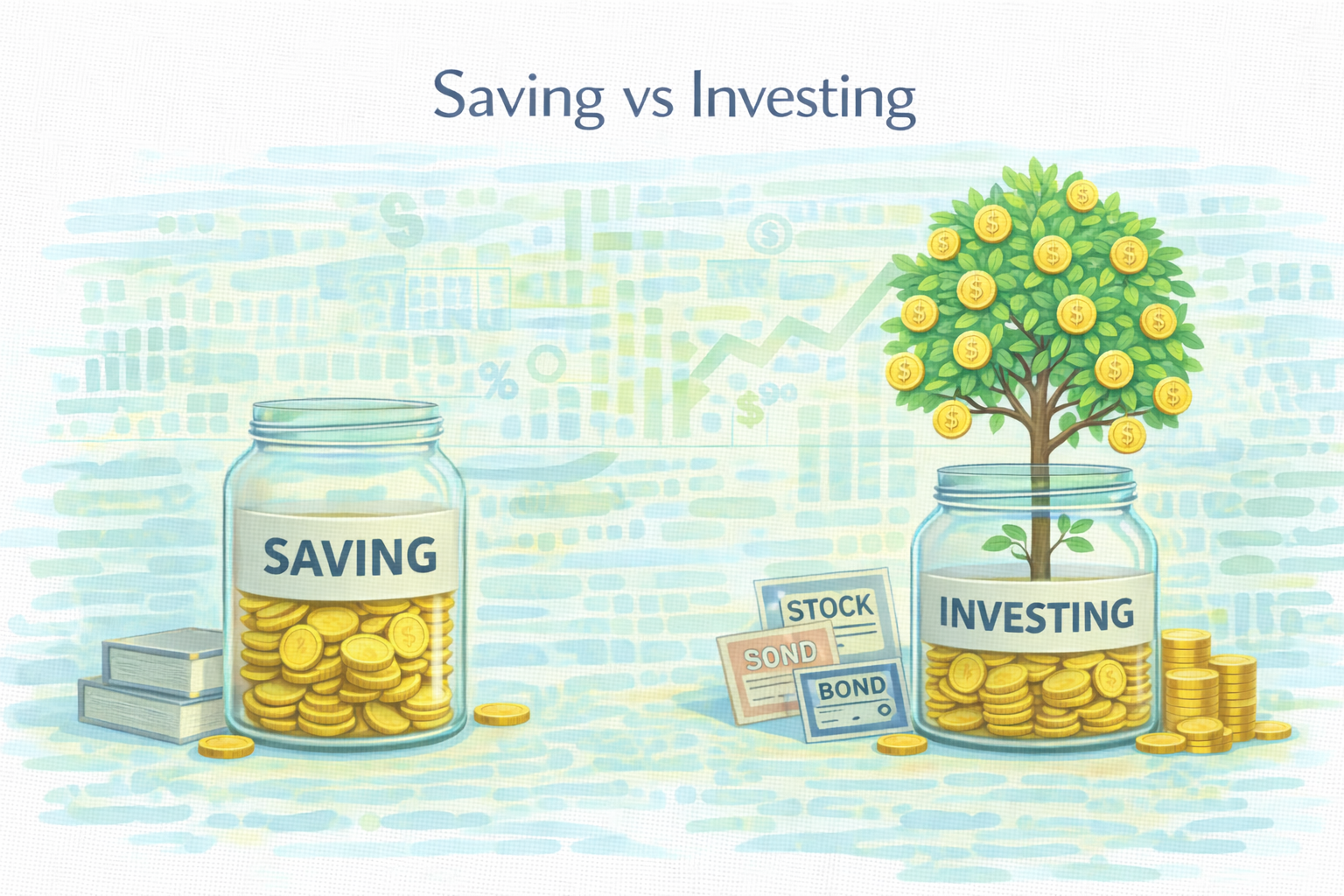
Headline A: Saving vs. Investing: Key Differences and Why You Need Both
Headline B: Saving and Investing: How Each Builds Your Financial Future
Headline C: Saving or Investing? How to Choose — and Why You Shouldn’t Pick Just One
Headline D: What Is Better: Saving or Investing? The Truth You Need to Know
Table of contents:
Introduction
What is Saving?
What is Investing?
Why Save?
Why Invest?
Why Both Matter
Finding the Right Balance
Real-Life Example: Monthly Budget With Saving and Investing
Common Mistakes to Avoid
Conclusion
Introduction
Managing money wisely is one of the most important skills for building a secure future. Two of the most common ways to handle money are saving and investing. While people often use these words interchangeably, they are not the same. Understanding the difference — and why both are essential — can help you make smarter financial decisions.
What is Saving?
Saving means putting aside money for short-term needs or unexpected expenses. You keep it in safe and easy-to-access places like a savings account, fixed deposit, or money market account. The main goal is peace of mind — knowing your money is there when you need it.
The primary goals of saving are security and liquidity. You save to ensure cash is available for emergencies, short-term goals, or unexpected expenses. Because savings are held in low-risk accounts, they earn modest returns, typically through small amounts of interest.
Modern budgeting platforms like Akinda.io can help you track your savings goals automatically and show how close you are to achieving them. By visualizing progress, you stay motivated to save consistently.
What is Investing?
Investing means using your money to buy assets — such as stocks, bonds, real estate, or mutual funds — that have the potential to grow in value over time. Unlike savings, investing carries risk: the value of your investment may rise or fall and you could lose money in the short term. However, investing offers the potential for higher returns than saving, which helps your money outpace inflation and accumulate wealth in the long term.
Why Save?
Saving money is more than just putting aside a little from each paycheck — it is the cornerstone of any solid financial plan. While investing focuses on growing wealth over the long term, savings give you security, flexibility, and peace of mind in the short term. Without a proper savings habit, even the best investment strategy can be derailed by an unexpected expense.
Saving money is a crucial part of financial planning. It matters because:
1. Provides an Emergency Cushion
Most financial planners recommend maintaining an emergency fund equal to at least three to six months of living expenses. This reserve acts as your first line of defense when life throws surprises your way — whether it’s a sudden medical bill, an urgent car repair, a broken appliance, or even a temporary loss of income. Having cash readily available allows you to manage these situations without resorting to high-interest credit cards, payday loans, or dipping into your retirement investments. For example, if you spend $1,000 a month on essentials, building an emergency fund of $3,000–$6,000 can mean the difference between stability and stress during a crisis.
2. Offers Peace of Mind and Confidence
Knowing you have a financial cushion reduces anxiety about the future. It lets you approach decisions about work, family, and life changes more calmly, because you’re not living paycheck to paycheck. This mental freedom can also improve your overall health and decision-making, since you’re less likely to panic-spend or panic-borrow when something unexpected happens.
3. Funds Short-Term Goals Without Debt
Savings are also perfect for planned, near-term objectives such as a vacation, a wedding, a home renovation, a car purchase, or tuition for a short course. Setting up separate savings “buckets” for each goal helps you track progress and stay motivated. When the time comes, you can pay for the expense in cash instead of using a credit card or selling investments at an inopportune time.
Key Features of Savings:
High Liquidity: Funds are easily accessible, usually within 24–48 hours. This makes savings ideal for emergencies or time-sensitive purchases.
Low Risk: Savings products such as bank accounts, money market accounts, or certificates of deposit have minimal chance of losing your principal, and in many countries they are insured up to a certain limit.
Stable but Modest Returns: Your money typically grows slowly at a fixed or variable interest rate that is lower than the long-term average return of riskier investments.
Short Time Horizon: Savings work best for goals ranging from a few weeks to a few years. If you won’t need the funds for five years or more, investing might offer better growth.
Limitations of Relying Only on Savings:
Lower Yields: Savings accounts rarely deliver returns that beat long-term inflation or match the potential growth of investments like stocks or bonds.
Inflation Risk: Over time, rising prices erode the purchasing power of cash held in low-interest accounts. For example, at 3% annual inflation, $1,000 today would only buy about $860 worth of goods a decade from now if it isn’t earning sufficient interest.
Opportunity Cost: Money sitting in a savings account is safe, but it’s also not working as hard as it could. Funds earmarked for long-term goals may earn significantly more if invested in assets with higher expected returns, such as index funds or real estate.
Why Invest?
Investing is one of the most effective ways to build financial security and create long-term prosperity. While saving gives you stability and immediate access to cash, investing aims to grow your money at a faster rate by putting it to work in assets such as stocks, bonds, mutual funds, exchange-traded funds (ETFs), real estate or even small businesses. By accepting a certain level of risk, you open the door to higher potential returns — and the chance to achieve goals that simple saving alone may never reach.
Investing Helps You:
1. Beat Inflation
Inflation slowly erodes the purchasing power of money. A dollar today won’t buy as much in ten years if it sits in a low-interest savings account. Investments, on the other hand, have historically produced returns above the rate of inflation, helping your money grow in “real” terms. For example, a diversified stock portfolio has often delivered long-term annual returns of 6–8% after inflation, compared to savings accounts that may pay only 1–2%.
2. Build Long-Term Wealth
Investing is essential for funding major life goals: retirement, college education, buying a home, or starting a business. By steadily investing over time — even in modest amounts — you can accumulate a large nest egg. Many retirement plans around the world rely on investment growth because pensions and government benefits alone are rarely enough to maintain your desired lifestyle.
3. Harness the Power of Compounding
Compounding occurs when your investment earnings — interest, dividends, or capital gains — are reinvested and start earning their own returns. This creates a snowball effect where the growth accelerates over time. The earlier you begin, the more powerful compounding becomes. For instance, investing $200 a month from age 25 rather than 35 can result in tens of thousands of extra dollars by retirement.
To manage investments wisely, many individuals use analytical tools like Akinda.io, which allows users to monitor market trends, evaluate performance, and make informed decisions without getting overwhelmed by data.
Limitations and Risks of Investing:
While investing offers the potential for higher returns, it also comes with trade-offs. Understanding these helps you choose strategies that fit your goals and risk tolerance.
1. Market Risk
The value of your investments can rise or fall due to economic changes, market volatility, interest rate shifts or company performance. In severe downturns, you may experience significant temporary losses — or permanent losses if you sell at the wrong time.
2. Liquidity Risk
Some investments, such as real estate, private equity or certain mutual funds, are not easily converted to cash. Selling them may take time, and selling early can force you to accept a lower price than you expected.
3. Time Horizon Requirement
Investments generally need several years to grow enough to offset short-term fluctuations. If you know you’ll need money soon — for example, for a house deposit within a year — investing may not be appropriate.
4. Complexity and Knowledge Needs
Choosing the right investments requires research, planning and sometimes professional advice. Different asset classes behave differently, and poorly chosen investments can underperform or lose money. Diversification and risk management are crucial.
5. Emotional Stress
Market ups and downs can cause anxiety. Many investors panic during declines and sell at a loss, then miss the recovery. Successful investing requires patience, discipline and a focus on long-term goals rather than short-term noise.
Here you can find shares analysed by specialists to reduce those limitations.
Why Both Matter
Both saving and investing play crucial roles in financial planning. Savings provide a safety net for unexpected expenses, reduce stress, and prevent you from going into debt. Investing, on the other hand, helps you achieve long-term goals such as retirement, home ownership, or your children’s education. Without saving, you might have no cash for emergencies; without investing, your money may lose value due to inflation and you might miss the chance to build wealth.
Finding the Right Balance
A healthy financial plan includes both saving and investing. Start by building an emergency fund that covers at least three to six months of living expenses. Once you have that cushion, begin investing regularly for your long-term goals. This combination creates financial stability now and growth for the future.
A healthy financial plan uses both strategies:
1. Build your emergency fund first
Aim for at least three to six months of living expenses in an easily accessible savings account.
2. Pay off high-interest debt
Before investing heavily, pay down costly debt such as credit cards.
3. Begin investing regularly
Once you have an emergency fund and manageable debt, start investing for long-term goals — even small amounts each month add up thanks to compounding.
4. Match time horizons to your approach
Money you’ll need in the next 1–3 years → keep it in savings.
Money you won’t need for 5+ years → consider investing.
5. Diversify your investments
Spread your money across different asset types to reduce risk.
Real-Life Example: Monthly Budget With Saving and Investing
Let’s imagine Samira, a 30-year-old professional earning \$1,500 per month. She wants to balance her short-term needs with long-term wealth building. Here’s a sample breakdown of her monthly finances:
| Category | Amount per Month | Purpose |
| Living expenses (rent, utilities, groceries, transport) | $800 | Covers day-to-day necessities |
| Emergency fund savings | $200 | Builds a 3–6 month cushion for unexpected events |
| Short-term goal savings (vacation, new laptop, courses) | | $100 | Funds planned expenses within 1–2 years |
| Investments (stocks, mutual funds, retirement account) | $300 | Long-term growth and wealth accumulation |
| Leisure / discretionary spending | $100 | Dining out, hobbies, personal treats |
How this works:
Samira ensures her essentials are covered while building a safety net.
She saves for short-term goals without risking her emergency fund.
A significant portion goes into investments to grow her wealth over time.
Even small discretionary spending is accounted for, making her budget realistic and sustainable.
Outcome over time:
Within 6 months, she could have a solid emergency fund of \$1,200.
Her investments, if consistently contributed to, could grow substantially over several years thanks to compounding.
She maintains a balance between financial security today and growth for the future.
This approach balances short-term security with long-term growth and reflects widely recommended financial planning strategies.
Common Mistakes to Avoid
Saving too little: Without a strong savings buffer, even small emergencies can force you into debt.
Investing too aggressively too soon: If you invest money you might need soon, you risk being forced to sell at a loss.
Relying only on savings: Keeping all your money in savings means inflation erodes your purchasing power and you miss out on growth opportunities.
Conclusion
Saving and investing are not opposites; they’re partners in your financial journey. Saving gives you safety and flexibility for today. Investing builds the wealth you’ll need for tomorrow. By combining both strategies — starting with a solid savings foundation, then gradually increasing your investments — you create a balanced, resilient financial plan that can weather life’s surprises and help you achieve your goals (Investopedia, 2024).
References
Bankrate. (2023). Saving vs. Investing: Key Differences and When to Choose. Retrieved from [https://www.bankrate.com/investing/saving-vs-investing/](https://www.bankrate.com/investing/saving-vs-investing/)
Investopedia. (2024). Saving vs. Investing: Understanding Key Differences. Retrieved from [https://www.investopedia.com/articles/investing/022516/saving-vs-investing-understanding-key-differences.asp](https://www.investopedia.com/articles/investing/022516/saving-vs-investing-understanding-key-differences.asp)
Morgan Stanley. (2023). What’s the Difference Between Saving and Investing? Retrieved from [https://www.morganstanley.com/articles/saving-investing](https://www.morganstanley.com/articles/saving-investing)
TD Bank. (2023). Saving vs. Investing. Retrieved from [https://www.td.com/ca/en/personal-banking/personal-investing/learn/saving-vs-investing](https://www.td.com/ca/en/personal-banking/personal-investing/learn/saving-vs-investing)
Wells Fargo. (2024). Saving vs. Investing. Retrieved from [https://www.wellsfargo.com/goals-investing/saving-vs-investing/](https://www.wellsfargo.com/goals-investing/saving-vs-investing/)
Keywords:
Saving vs investing
Difference between saving and investing
Why saving and investing matter
Saving and investing for beginners
Monthly budgeting for saving and investing