
- Stock Market & Equities
Weekly Market Digest: May 4-8, 2026 | Nasdaq Hits Record High as Strong Jobs Data and AI Stocks Drive Markets Higher
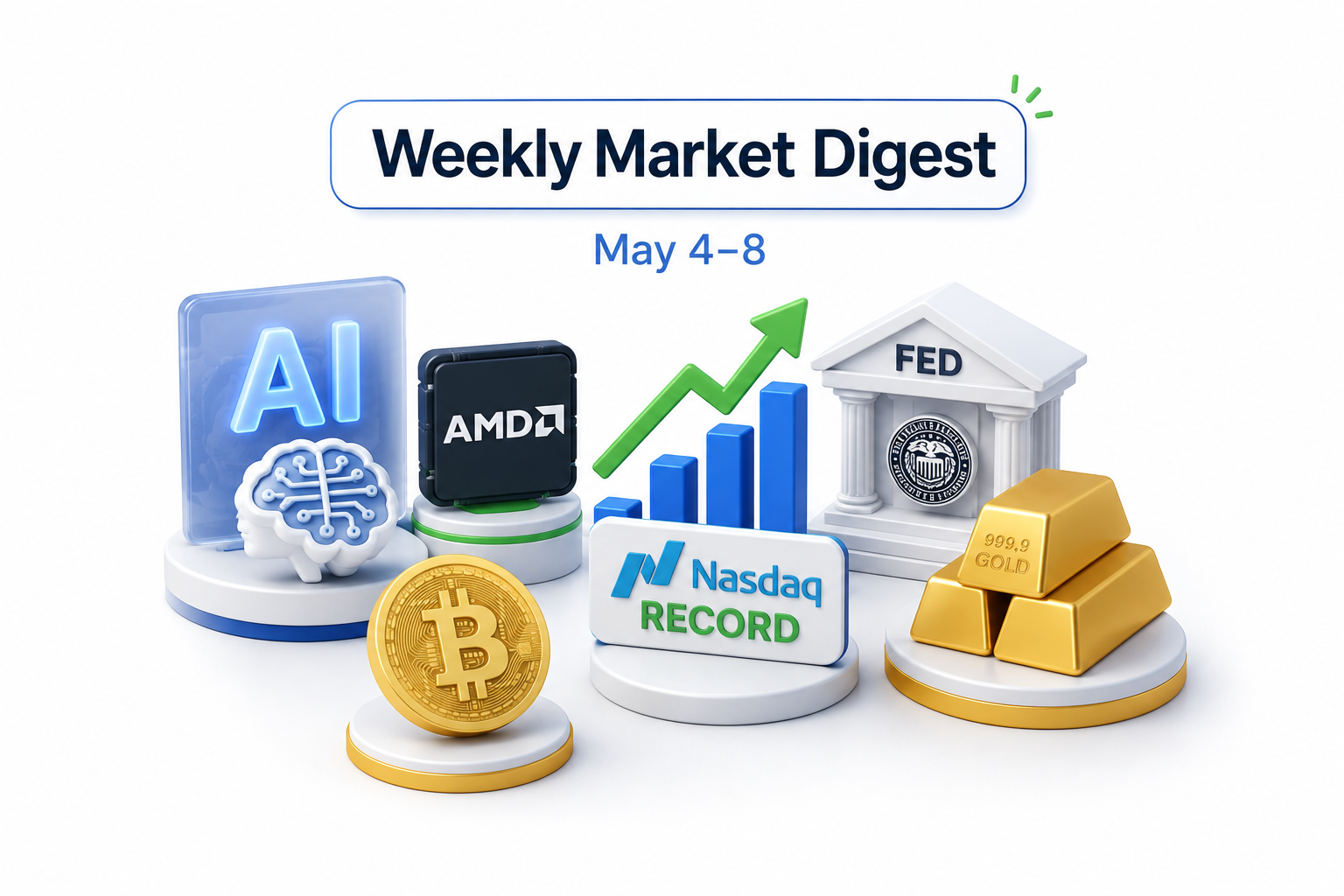
Table of Contents
- Jobs Report: 115K vs ~60K Forecast
- Fed Held Rates at 3.50-3.75% With 4 Dissents
- AMD Earnings: Revenue +38%, Data Center +57%
- Oil Returned Above $100 - Markets Reacted, Then Recovered
- Nasdaq Hit Another Record High
- Gold Near $4,700 While Bitcoin Consolidated Around $80K
1. Jobs Report: 115K vs ~60K Forecast
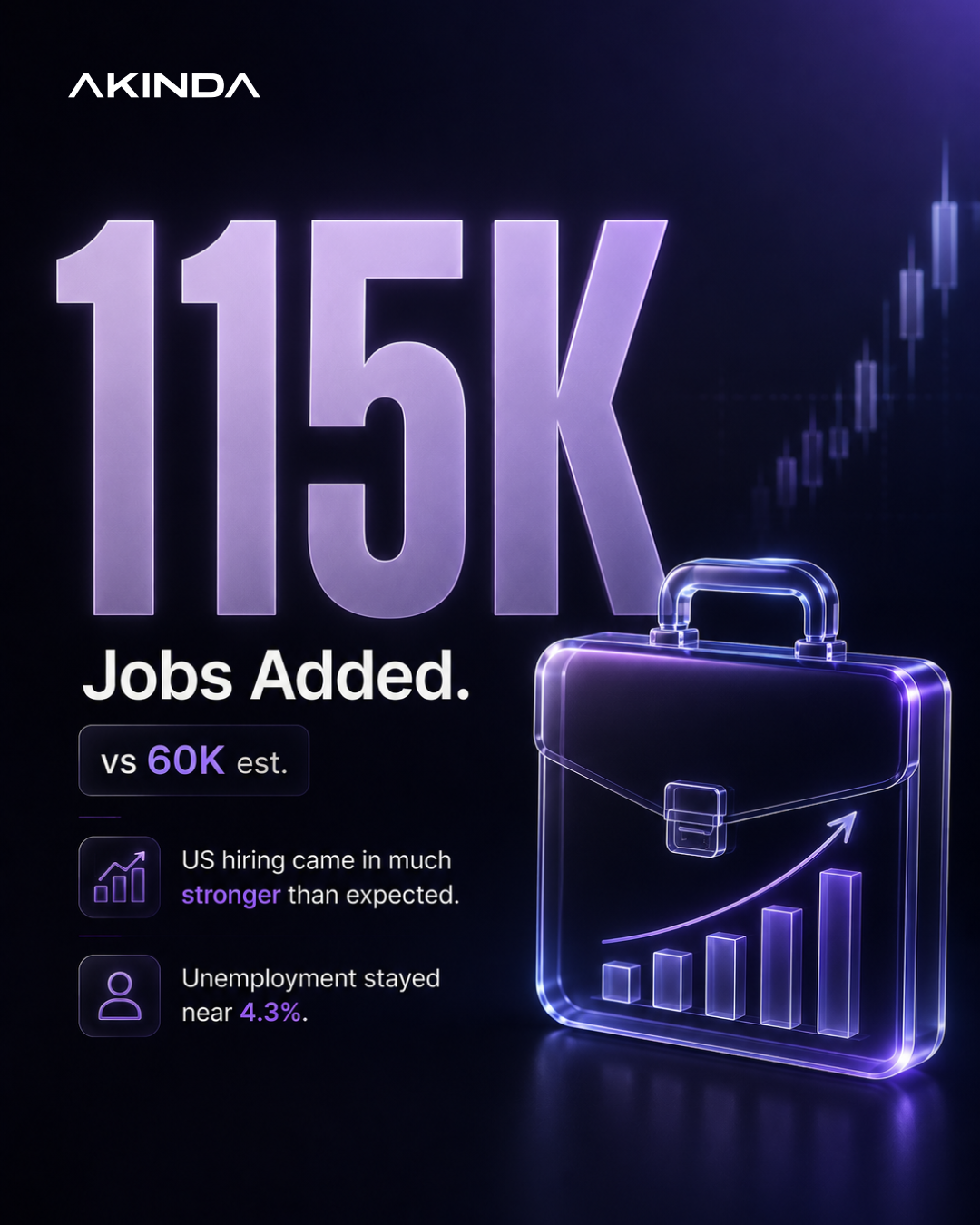
The Bureau of Labor Statistics reported that US employers added 115,000 jobs in April, well above the Wall Street consensus of roughly 60,000. The unemployment rate held steady at 4.3%. Healthcare and transportation and warehousing were the leading sectors. March and April became the first two back-to-back months of six-figure job growth since late 2024.
The headline number was strong, but a few details underneath deserve attention. Average hourly earnings rose just 0.2% month-over-month - a soft reading that suggests wage pressure is continuing to ease. Labor force participation slipped to 61.8% from 61.9% in March, and is down from 62.5% a year ago, which can reflect workers exiting the job search. February and March payrolls were revised down by a combined 16,000.
The overall picture is of a labor market that is cooling but not crashing - resilient enough to avoid recession fears, but not strong enough to change the Fed's posture on rates.
Market reaction: The S&P 500 rose 0.84% on Friday after the release and closed at an all-time high. The Nasdaq added 1.71%. Treasury yields dipped slightly. Stocks were already higher before the data, and held those gains after it.
2. Fed Held Rates at 3.50-3.75% - With 4 Dissents
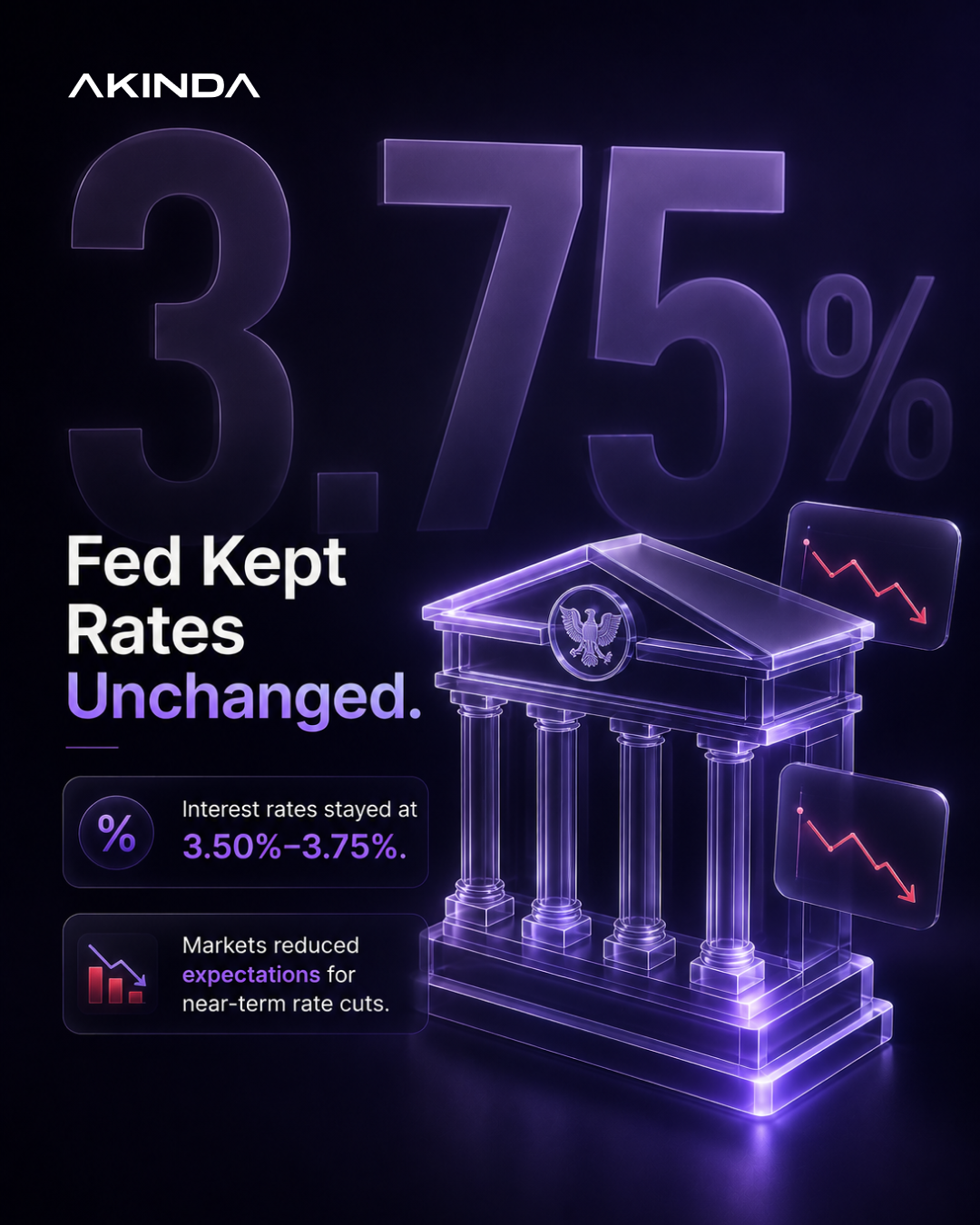
The Federal Open Market Committee voted at its April 29 meeting to keep the federal funds rate unchanged at 3.50%–3.75%. The decision itself was widely expected. What drew attention was the level of internal disagreement.
Four FOMC members voted against the decision - the highest number of dissents since 1992. Three members (Hammack, Kashkari, Logan) agreed with the hold but objected to language in the statement that signaled an easing bias. One member, Governor Stephen Miran, dissented in favor of cutting rates by 25 basis points immediately.
The Fed's statement said inflation remains "elevated, in part reflecting the recent increase in global energy prices," a reference to the US-Iran conflict. The Committee noted "a high level of uncertainty about the economic outlook." In a post-meeting interview, Chair Powell said the center of the committee is "moving toward a more neutral place" but stressed there is no preset timeline for any change.
This was likely Powell's final FOMC press conference as Chair. During the week, Kevin Warsh's nomination to lead the Fed advanced through the Senate Banking Committee, moving toward a full Senate confirmation vote. Warsh is broadly seen as more hawkish than Powell, though some market participants expect he would cut rates to ease credit conditions.
Market reaction: Rate-sensitive sectors underperformed throughout the week. The Russell 2000 small-cap index fell 1.63% on Friday, even as the large-cap S&P 500 hit a record. The divergence reflects ongoing concern that higher-for-longer rates weigh disproportionately on smaller, more debt-dependent companies.
3. AMD Earnings: Revenue +38%, Data Center +57%
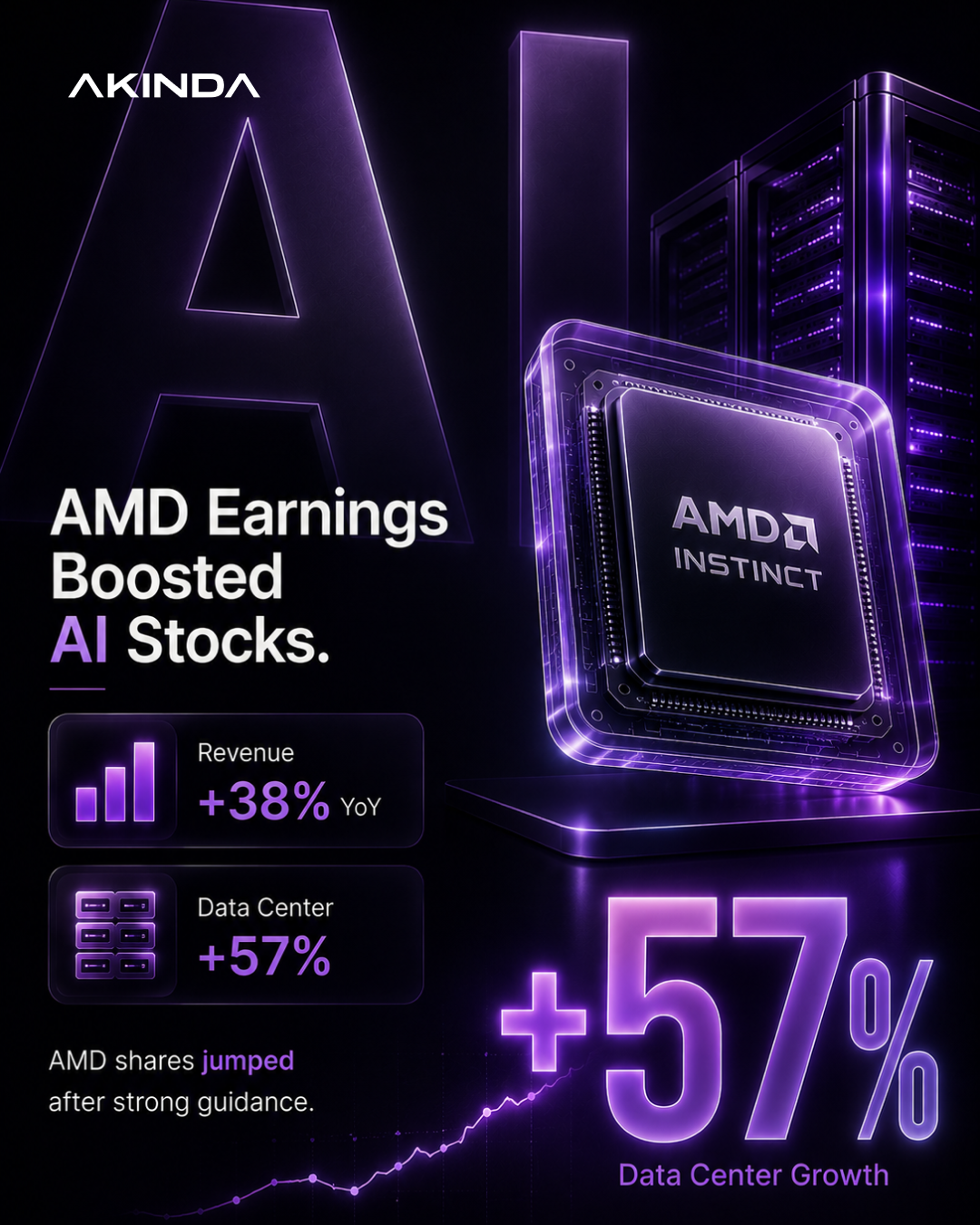
Advanced Micro Devices reported Q1 2026 results that beat analyst expectations across the board.
Revenue came in at $10.25 billion, up 38% year-over-year, versus an analyst consensus of roughly $9.5 billion. Adjusted EPS was $1.37, above the $1.25–$1.29 consensus. The Data Center segment - AMD's highest-growth unit 0 generated $5.8 billion in revenue, up 57% year-over-year, ahead of the $5.6 billion estimate. For Q2 2026, AMD guided approximately $11.2 billion in revenue, above the ~$10.5 billion consensus.
AMD stock rose approximately 16% on the day following the report. The move lifted the broader chip sector: Intel climbed around 6%, Arm Holdings jumped roughly 11%, and Qualcomm added about 4% on the same session.
A notable detail from the earnings call: both OpenAI and Meta have signed up for AMD's upcoming Helios rack-scale AI system, designed to compete with Nvidia's top-end data center platforms. This is the first credible large-scale commitment from major AI labs to AMD infrastructure beyond GPUs, and it matters for AMD's long-term positioning.
On the CPU side, AMD's data center processor demand is being boosted by the growth of AI agents, which run on CPUs rather than GPUs. This is an area where AMD has historically been strong.
Earnings at a glance:
| Metric | Actual | Estimate | vs Estimate |
|---|---|---|---|
| Revenue | $10.25B | ~$9.5B | Beat |
| Adj. EPS | $1.37 | $1.25–1.29 | Beat |
| Data Center revenue | $5.8B | $5.6B | Beat |
| Q2 2026 guidance | ~$11.2B | ~$10.5B | Above |
4. Oil Returned Above $100 - Markets Reacted, Then Recovered
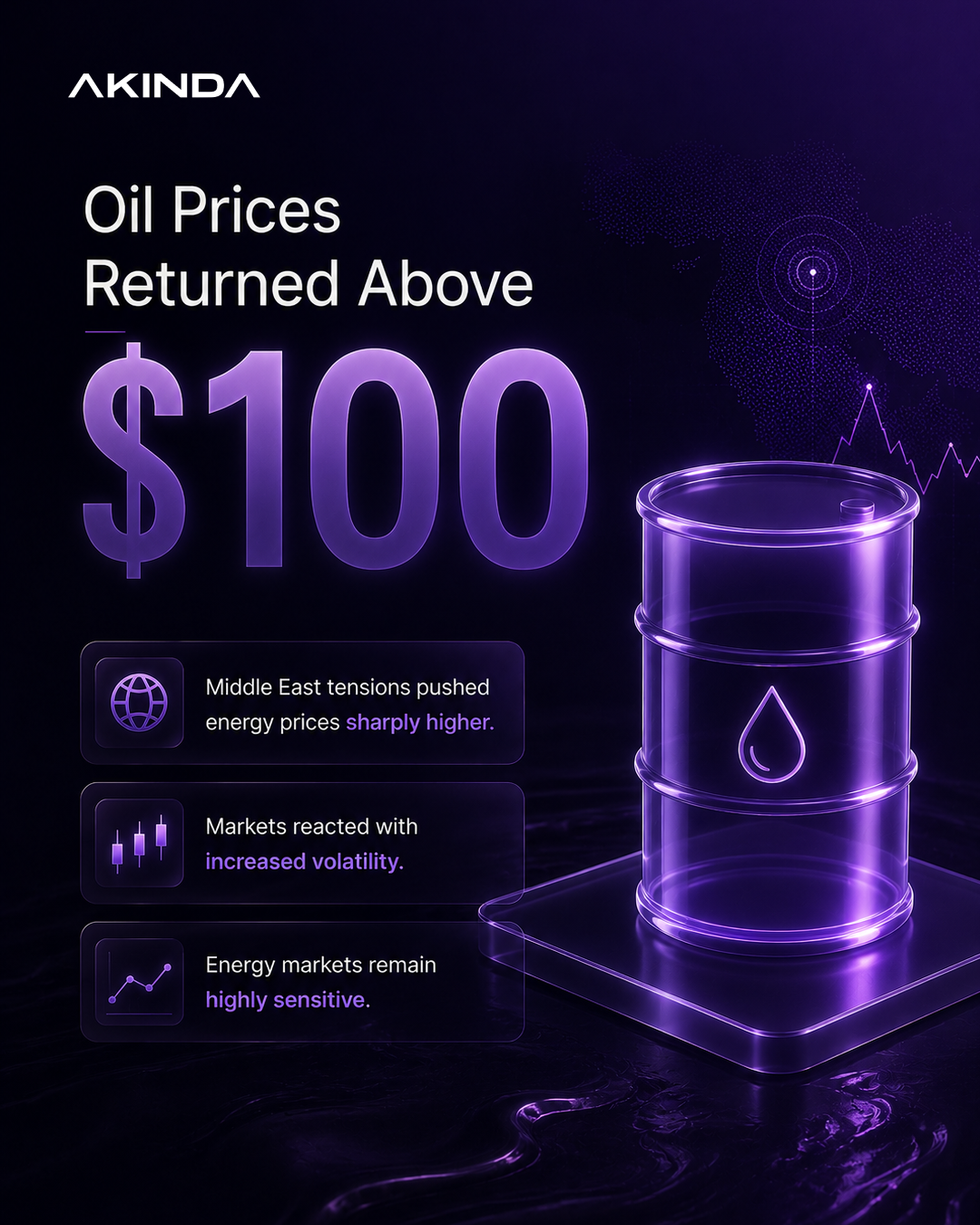
The US-Iran military conflict continued throughout the week and produced the sharpest intraday swings of any story in the digest.
Monday (May 4) opened with reports of fresh Iranian missile activity and UAE interceptions. West Texas Intermediate crude oil rose about 2.8% to $107.35 per barrel. The Dow Jones Industrial Average fell 557 points (–1.13%) on the day - its worst single-session drop of the week. Only Energy (+0.95%) and Technology (+0.02%) sectors finished positive.
Wednesday brought a partial reversal when reports of potential ceasefire negotiations circulated. The S&P 500 hit an all-time high intraday, and oil pulled back from its highs. Thursday reversed that again: Iran publicly denied any ceasefire. Oil rebounded, and nine of eleven S&P 500 sectors finished negative. Materials fell 1.9%, Energy dropped 1.8%, Industrials lost 1.6%. The S&P 500 gave back 0.4% to close at 7,337.11.
By Friday, labor market data dominated sentiment and markets closed at records, with oil risk appearing priced in rather than escalating.
The structural concern is real: oil above $100 adds to inflation, complicates the Federal Reserve's decision-making, and weighs on energy-intensive industries. A Strait of Hormuz disruption - not currently expected - would represent a materially different scenario.
5. Nasdaq Hit Another Record High
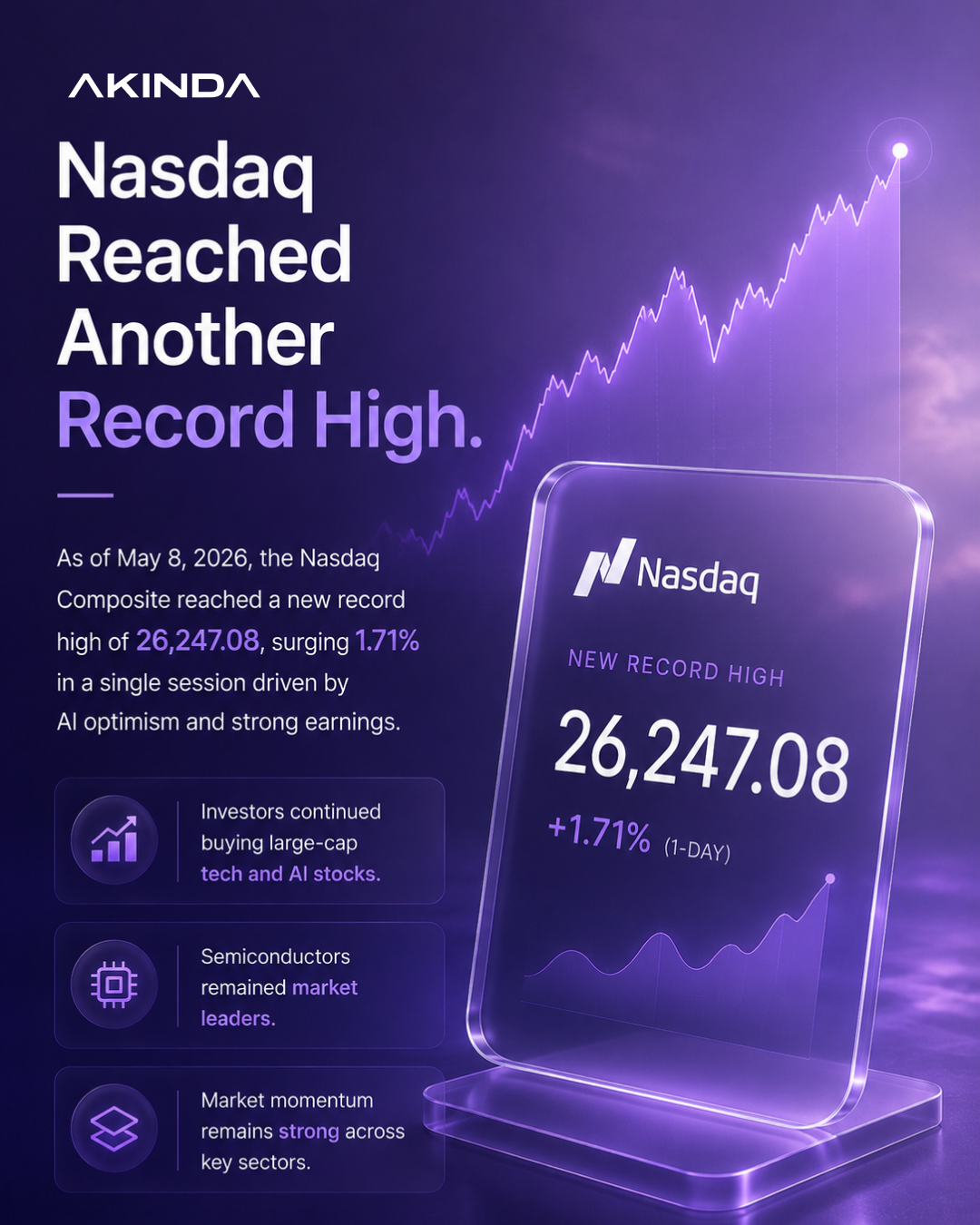
The Nasdaq Composite closed at 26,247.08 on Friday, a record. The broader S&P 500 Technology sector rose over 3.27% on May 6 alone and has gained approximately 35% since April 27 - a rally driven almost entirely by AI-related earnings and deal activity.
Semiconductor stocks led the advance. AMD's earnings (covered above) lifted the entire sector on May 5. The PHLX Semiconductor Index extended its outperformance versus the broader S&P 500 by the largest margin seen in over a year, according to market data cited by analysts this week. Micron, Arm Holdings, Intel, and Qualcomm all gained meaningfully.
Akamai Technologies (AKAM) added to the week's AI infrastructure theme after disclosing a $1.8 billion, seven-year cloud infrastructure deal with a major US-based AI company. Akamai shares surged 25–28% on Friday on the news and raised its full-year guidance. This followed Rackspace Technology (RXT), which gained about 12.5% earlier in the week after announcing a partnership with AMD to build AI cloud services for regulated industries.
Not every AI infrastructure name rallied. CoreWeave fell approximately 10% after guiding Q2 revenue of $2.45–$2.60 billion - below the $2.69 billion analyst consensus - despite Q1 revenues nearly doubling year-over-year to $2.1 billion. The market penalized the guidance miss and flagged the company's elevated capital spending plan of $31–$35 billion for 2026.
6. Gold Near $4,700 While Bitcoin Consolidated Around $80K
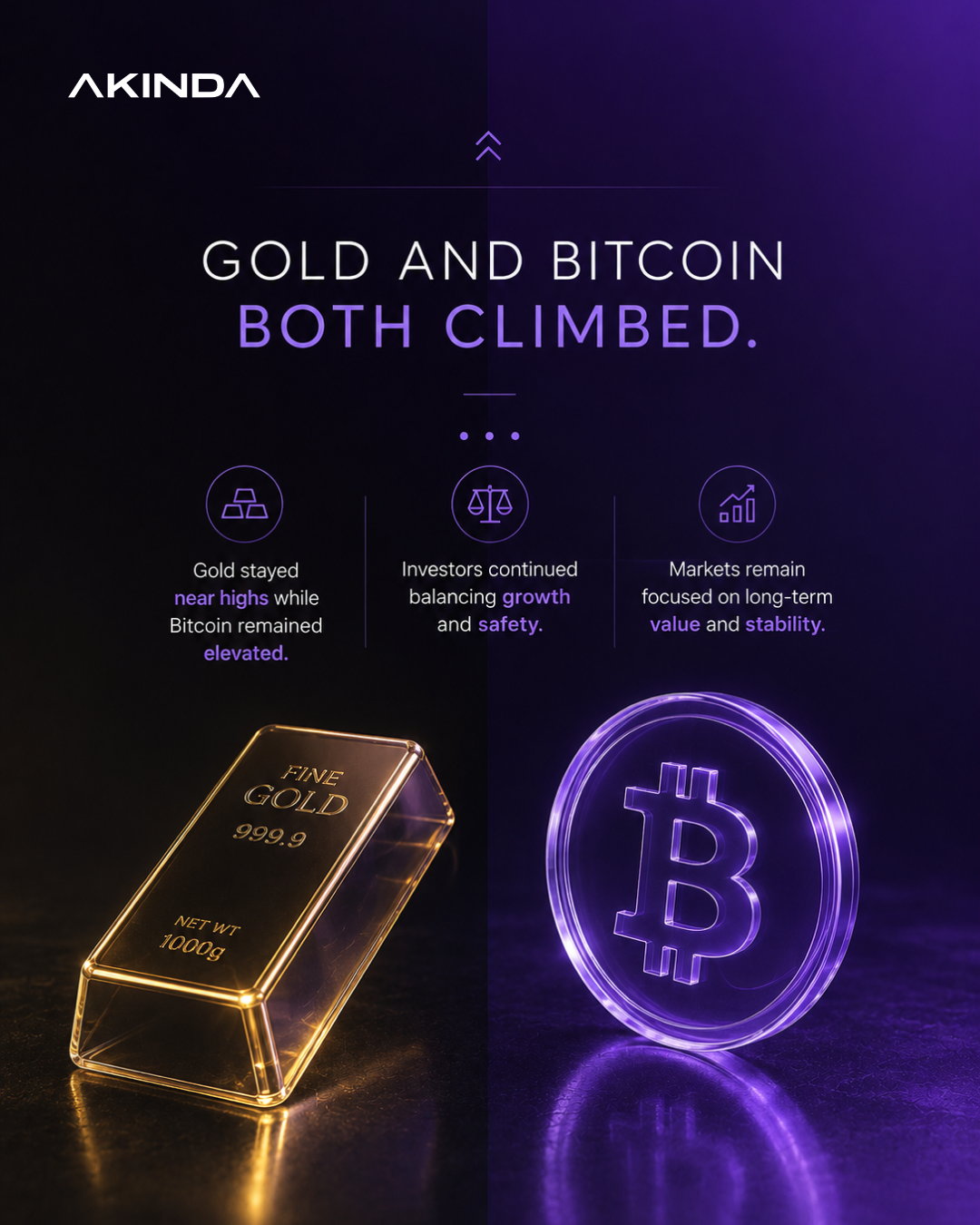
Gold traded in a range near $4,700–$4,850 per ounce during the week. Earlier in the period, spot gold had reached nearly $4,850 on geopolitical risk premium tied to the US-Iran conflict. By Thursday, with a temporary two-week ceasefire between the US and Iran announced, gold pulled back toward the $4,705 level as some safe-haven demand eased. The metal remains near multi-year highs, supported by persistent geopolitical uncertainty and elevated inflation. The direction for gold this week was slightly lower on ceasefire news, not higher - a nuance worth noting for safe-haven positioning.
Bitcoin traded in a consolidation range near $79,000–$81,000 during the week, based on available price data from May 5–6. The cryptocurrency showed no significant directional trend, with technical indicators pointing to a neutral-to-consolidating regime. Volume was elevated but without a clear catalyst pushing prices decisively in either direction. Bitcoin has been broadly rangebound below $100,000 for much of 2026, underperforming gold significantly on a year-to-date basis.
For investors monitoring safe-haven allocations: gold and Bitcoin sent different signals this week. Gold was volatile and event-driven, moving on ceasefire headlines. Bitcoin moved sideways, driven by neither fear nor clear risk-on appetite.
This digest is for informational purposes only and does not constitute investment advice. Always conduct your own research before making any investment decisions.
Sources verified as of May 9, 2026. All figures referenced from primary earnings releases, Federal Reserve statements, and major financial news outlets.