
- Investing Principles
What Is Investing and Why It Matters for Your Future
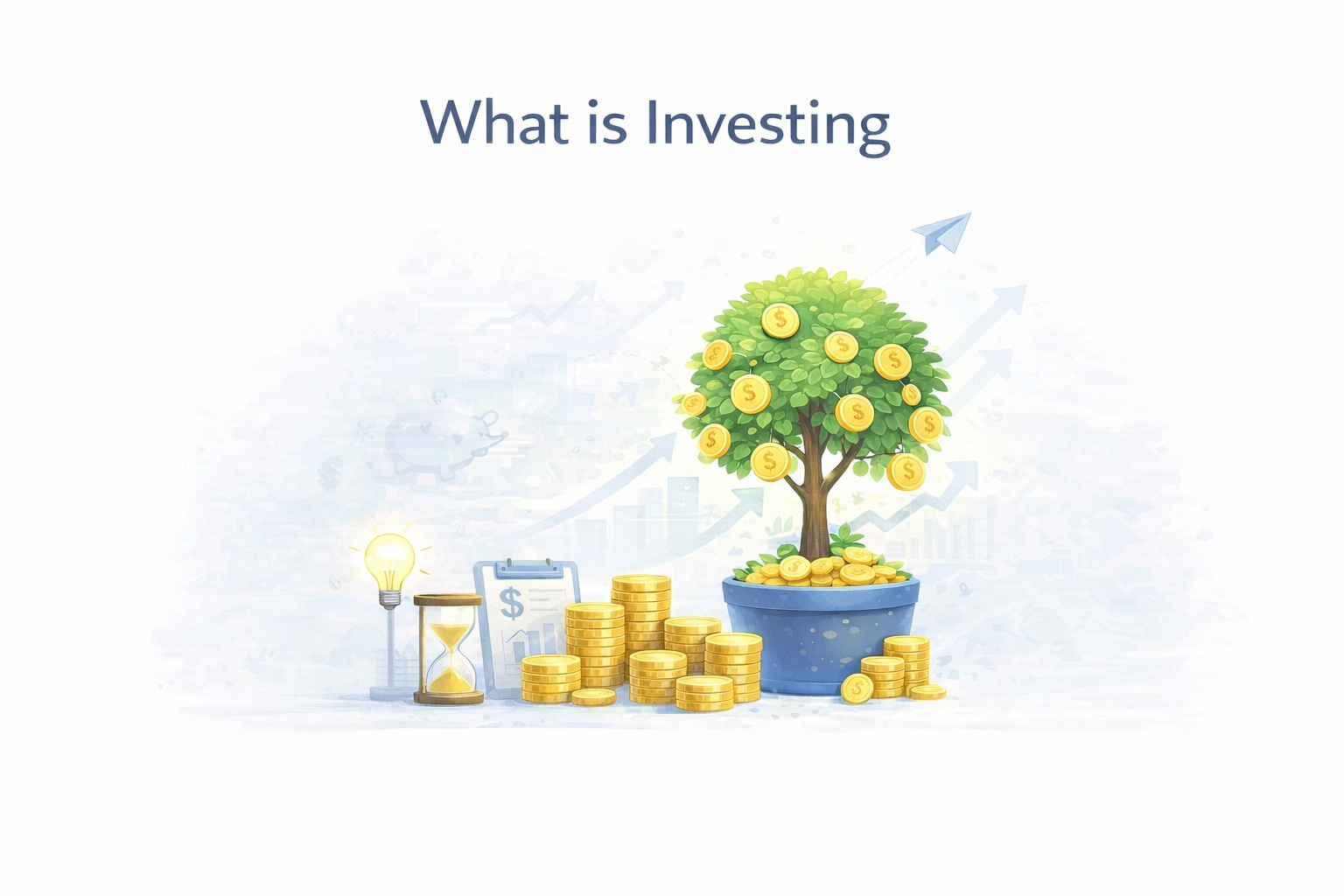
Table of Contents
- Introduction
- What Is Investing
- Why Investing Matters for Your Future
- Principles for Effective Investing
- Who Can Invest
- Common Barriers to Investing
- Practical Steps to Begin Investing
- Conclusion
Introduction
The world today is changing faster than ever. Prices go up, job security isn’t what it used to be, and technology keeps reshaping how we live and work.
As a result, relying solely on a salary is often not enough to feel financially secure.
That’s where investing comes in.
Investing is not just about buying stocks or bonds. It’s about making intentional decisions today so your money can grow over time. It’s a way to build wealth, protect yourself from rising costs, and prepare for the future.
In simple terms, investing helps you move from just earning money to actually growing it.
What Is Investing
At its core, investing means putting your money into something today with the expectation that it will grow or generate income in the future.
Instead of spending everything you earn, you set aside a portion and put it into assets like:
- Stocks — ownership in a company that can grow in value and pay dividends
- Bonds — loans to governments or companies that pay interest
- Real estate — property that can generate rental income and increase in value
- Funds (ETFs / Mutual Funds) — diversified portfolios managed collectively
- Businesses or start-ups — investments that grow if the company succeeds
- Commodities & alternatives — gold, oil, crypto, or collectibles
The goal is simple: let your money work for you.
Unlike saving, which focuses on safety and easy access, investing aims for higher returns, but it also involves some level of risk. Learning how to balance risk and reward is a key part of becoming a smart investor.
Today, tools like Akinda make this process much easier by helping beginners understand how investments perform and grow over time in a clear, simple way.
Why Investing Matters for Your Future
1. It Builds Wealth Over Time
One of the most powerful ideas in investing is compounding - earning returns not just on your money, but on your previous returns as well.
Even small, consistent investments can grow into a significant amount over time. The earlier you start, the bigger the impact.
2. It Creates Financial Freedom
Investing helps you shift from relying only on active income (your job) to generating passive income.
Over time, your investments can start covering major expenses, from education to travel, giving you more freedom to make life choices without constant financial pressure.
3. It Protects You from Inflation
Money sitting in cash slowly loses value as prices rise.
Investments, especially in assets like stocks or real estate, have historically grown faster than inflation, helping you maintain and even increase your purchasing power.
4. It Helps You Reach Big Goals
Buying a home, starting a business, or retiring comfortably all of these require money.
Investing gives you a structured way to work toward these goals rather than relying solely on savings.
5. It Reduces Risk Through Diversification
A smart investor doesn’t put all their money in one place.
By spreading investments across different assets, you reduce the impact of any single loss. If one area underperforms, another might balance it out.
6. It Supports Retirement and Legacy
Relying only on pensions is often not enough today.
Investing helps you build an additional income stream for retirement, and even create something valuable to pass on to your family.
7. It Opens New Opportunities
Having investments gives you flexibility.
You can:
- switch careers
- start a business
- take time off
- invest in yourself
In short, investing gives you options.
Principles for Effective Investing
Good investing isn’t about luck - it’s about discipline.
Here are some key principles:
- Start early and stay consistent - time matters more than timing
- Use compounding to your advantage - reinvest your returns
- Diversify wisely - don’t rely on a single asset
- Match your goals - invest according to your time horizon
- Control emotions - avoid panic decisions
- Review regularly - adjust as your life and markets change
One important truth:
Consistency over time often beats trying to “perfectly time” the market.
Who Can Invest
A common myth is that investing is only for experts or wealthy people.
That’s no longer true.
Today, almost anyone can start - even with small amounts. What matters more than how much you invest is how consistently you do it.
Platforms like Akinda are designed to make investing simpler, more accessible, and aligned with your personal values.
Common Barriers to Investing
Even though investing is more accessible now, many people still hesitate.
Here’s why:
1. Fear of Losing Money
Short-term market movements can be scary, especially for beginners.
2. Lack of Knowledge
Many people simply don’t know where to start, or believe investing is too complicated.
3. Short-Term Thinking
Focusing only on quick results often leads people to ignore long-term opportunities.
Practical Steps to Begin Investing
1. Understand Your Financial Situation
- Review income, expenses, and debts
- Build an emergency fund (3–6 months of expenses)
- Decide how much you can invest regularly
2. Set Clear Goals
- What are you investing for?
- Retirement? A house? Financial freedom?
3. Choose the Right Investments
- Learn the basics of stocks, ETFs, bonds, etc.
- Consider your risk tolerance
- Think about liquidity and taxes
4. Track and Adjust
- Monitor your portfolio
- Rebalance when needed
5. Get Help if Needed
You don’t have to do everything alone.
Use reliable platforms or apps like Akinda to simplify decisions and track your progress.
Conclusion
Investing is not just for the wealthy, it’s for anyone who wants a more secure and independent future.
It helps you:
- grow your money
- protect against inflation
- achieve long-term goals
- create financial freedom
The earlier you start, the more powerful the results.
In the end, investing isn’t about being perfect - it’s about being consistent.
And the best time to start is always now.
References:
- Bodie, Z., Kane, A., & Marcus, A. J. (2021). Investments (12th ed.). New York: McGraw-Hill Education.
- Gitman, L. J., & Zutter, C. J. (2023). Principles of Managerial Finance (16th ed.). Boston: Pearson.
- Hayes, A. (2023). Investment basics explained with types to invest in. Investopedia. Available at: https://www.investopedia.com/terms/i/investment.asp (Accessed: 23 September 2025).
- Mankiw, N. G. (2022). Principles of Economics (10th ed.). Boston: Cengage Learning.
- Markowitz, H. (1952). Portfolio selection. The Journal of Finance, 7(1), 77–91.
- Napkin Finance. (2020). How to invest money: Investing for beginners. Available at: https://napkinfinance.com/napkin/invest-money/ (Accessed: 9 October 2025).
Keywords: investing, what is investing, why investing matters, investing for the future, importance of investing, benefits of investing, investing vs saving, investing for beginners, building wealth, long-term investing, how to start investing