
- Halal investing for beginners
How to Buy Halal Stocks: A Step-by-Step Guide
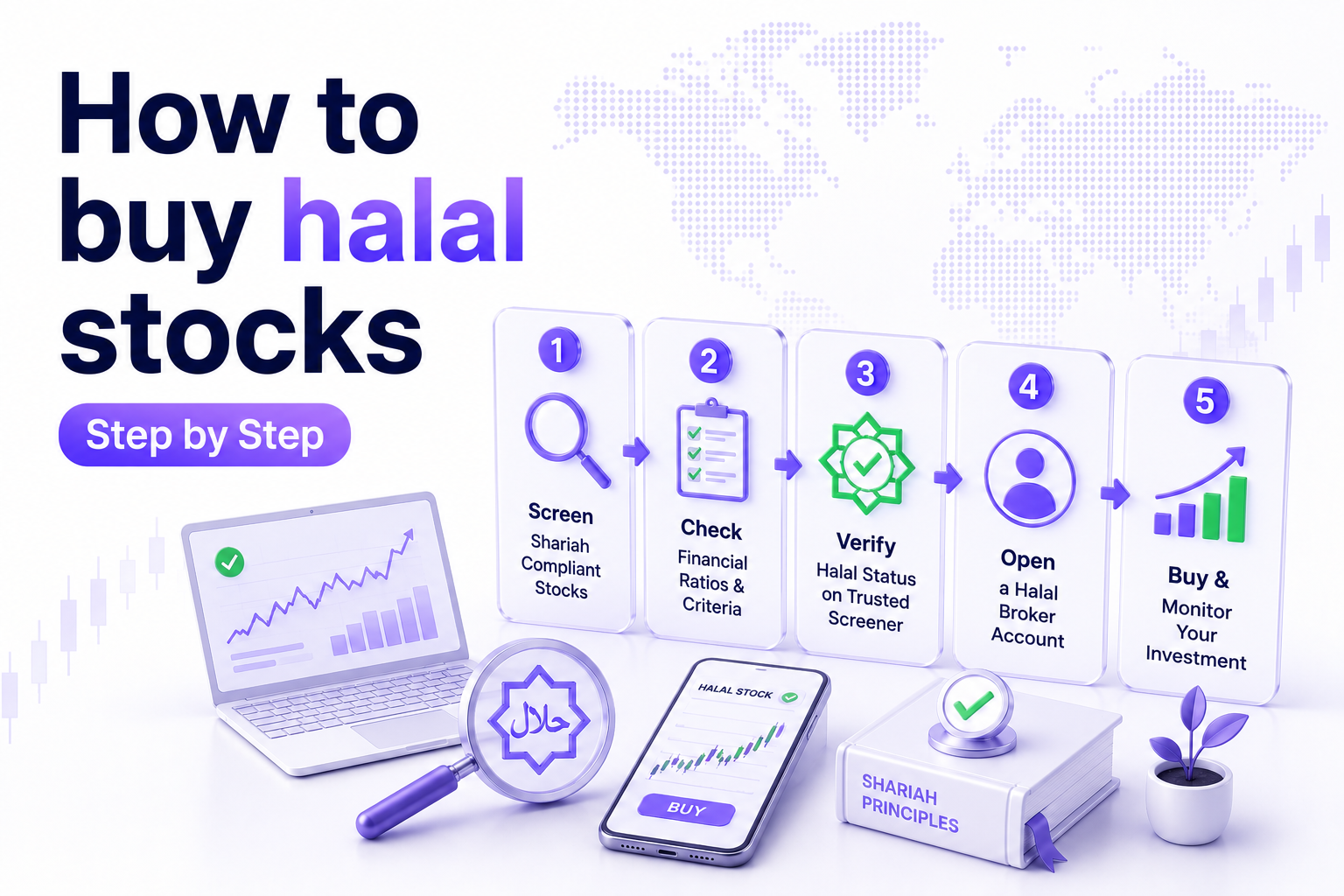
Once you know a stock is Shariah-compliant, actually buying it is the easy part, but there are a few steps that keep the whole process halal, not just the stock. Buying halal stocks means screening first, choosing the right kind of brokerage account, and avoiding interest and leverage along the way. The good news is you can use almost any mainstream broker, from Interactive Brokers to Alpaca, Trading 212, or Webull. This guide walks through the full process step by step, using IBKR and Alpaca as worked examples, so you can go from a compliant shortlist to owning the shares.
Quick Answer To buy halal stocks: (1) screen the company for Shariah compliance first, using an AAOIFI-based screener; (2) open an account with a mainstream broker such as Interactive Brokers, Alpaca, Trading 212, or Webull, choosing a cash (non-margin) account so you avoid interest; (3) fund the account without using margin or interest-bearing features; (4) place a market or limit order to buy the shares; and (5) track your holdings and purify any small impure income. The broker is just the pipe, the compliance work happens before you buy. |
Table of Contents
- Can you buy halal stocks with any broker?
- Step 1: Screen the stock for compliance
- Step 2: Choose a broker
- Step 3: Open and fund your account
- Step 4: Place your order
- Step 5: Track and purify
Can you buy halal stocks with any broker?
Mostly, yes. A brokerage is just the pipe that connects you to the market; it doesn't make a stock halal or haram. What matters is which stock you buy and how you hold it. You can use Interactive Brokers (IBKR), Alpaca, Trading 212, Webull, or almost any other mainstream broker to buy Shariah-compliant shares.
The one thing to watch is the account setup. Avoid margin accounts, which lend you money at interest, and be mindful of features like interest paid on idle cash. Choosing a plain cash account, and skipping interest-bearing extras, keeps the brokerage side clean. With that in mind, here's the full process.
Step 1: Screen the stock for compliance
Before you buy anything, confirm the stock is Shariah-compliant. Enter the ticker into an AAOIFI-based screener to check the two things that matter: the company's business activity and its financial ratios. On Akinda's halal stock screener, you'll see a clear halal verdict plus the debt, interest-income, and impermissible-income figures behind it. If you don't have a specific name yet, browse the top halal stocks to start from a compliant shortlist.
Only move on to buying once the stock passes. This first step is the actual compliance work; everything after it is just execution.
Step 2: Choose a broker
Any of the major brokers works. They differ mainly on market access, fees, and where they're available.
| Broker | Best for | Notes |
|---|---|---|
| Interactive Brokers | Global markets, low fees | Widest access to US, UK, and international exchanges; choose a cash account. |
| Alpaca | US stocks, automation | Commission-free US trading with fractional shares and an API for automation. |
| Trading 212 | Beginners in UK/EU | Commission-free, fractional shares, simple mobile app. |
| Webull | US, mobile-first | Commission-free US stocks and fractional shares. |
Whichever you pick, the same rule applies: open a cash account, not a margin account, and don't enable interest-based features. We'll use IBKR and Alpaca for the examples below, since both are widely available and support the clean setup you want.
Step 3: Open and fund your account
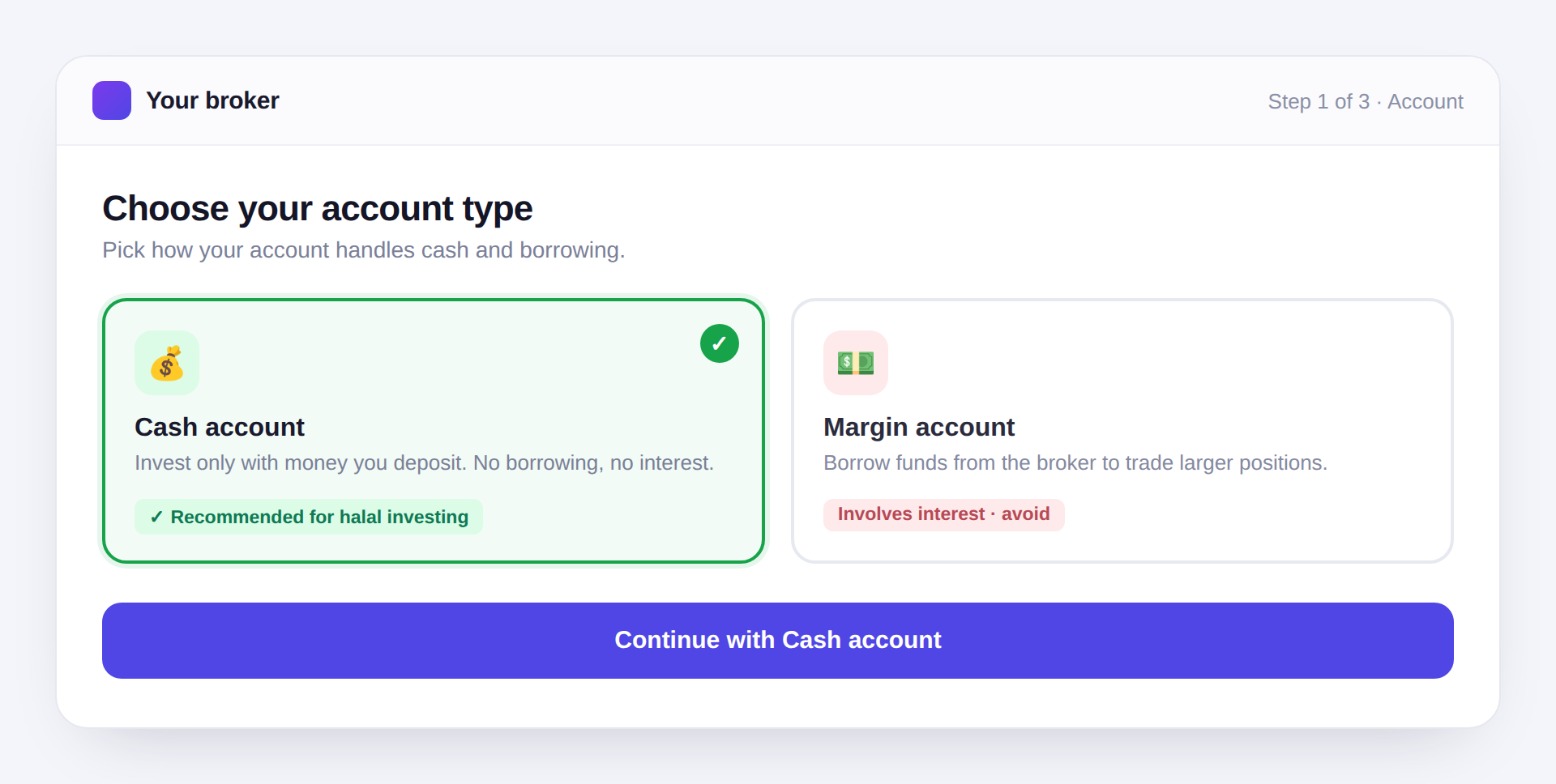
Opening an account takes a few minutes online. You'll verify your identity, answer some suitability questions, and choose your account type. This is the most important screen in the whole process, so choose carefully.
- Select a cash account (sometimes called a non-margin or basic account), not a margin account.
- Decline optional margin, lending, or interest-on-cash features if you're asked.
- Complete identity verification and link a funding source.
- Transfer funds by bank transfer, and let the cash settle before trading.
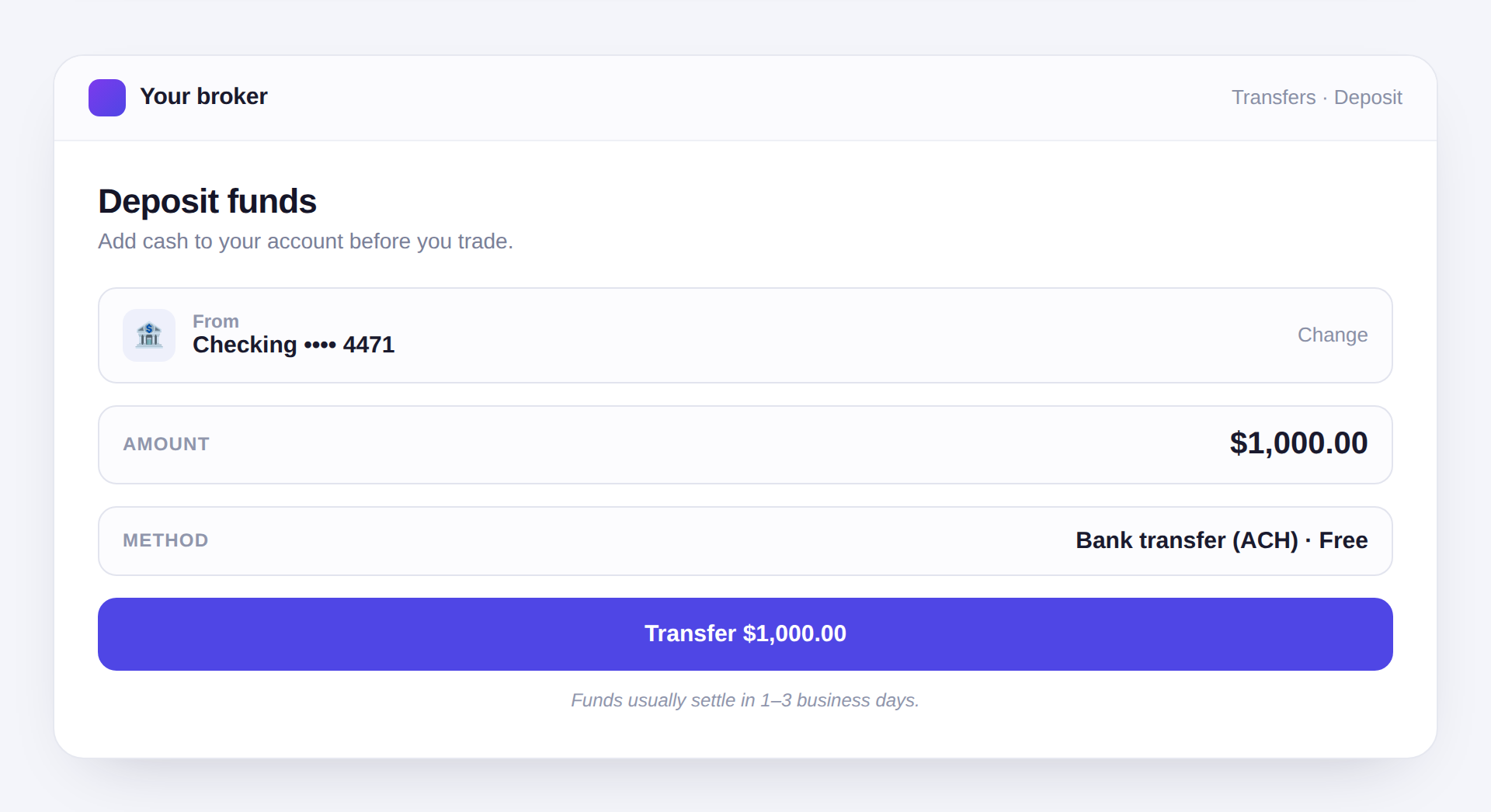
On Alpaca, this is the “Banking” or “Transfers” section; on IBKR, it's under “Transfer & Pay.” Once the deposit settles, you're ready to trade.
Step 4: Place your order
With funds settled, buying the stock is quick. Search for the ticker you screened, choose your order type, and confirm.
- Search the ticker and open its trade or order ticket.
- Choose an order type: a market order buys at the current price, while a limit order lets you set the maximum price you'll pay.
- Enter the number of shares (or a dollar amount, if the broker supports fractional shares).
- Review and submit the order, then confirm it filled.
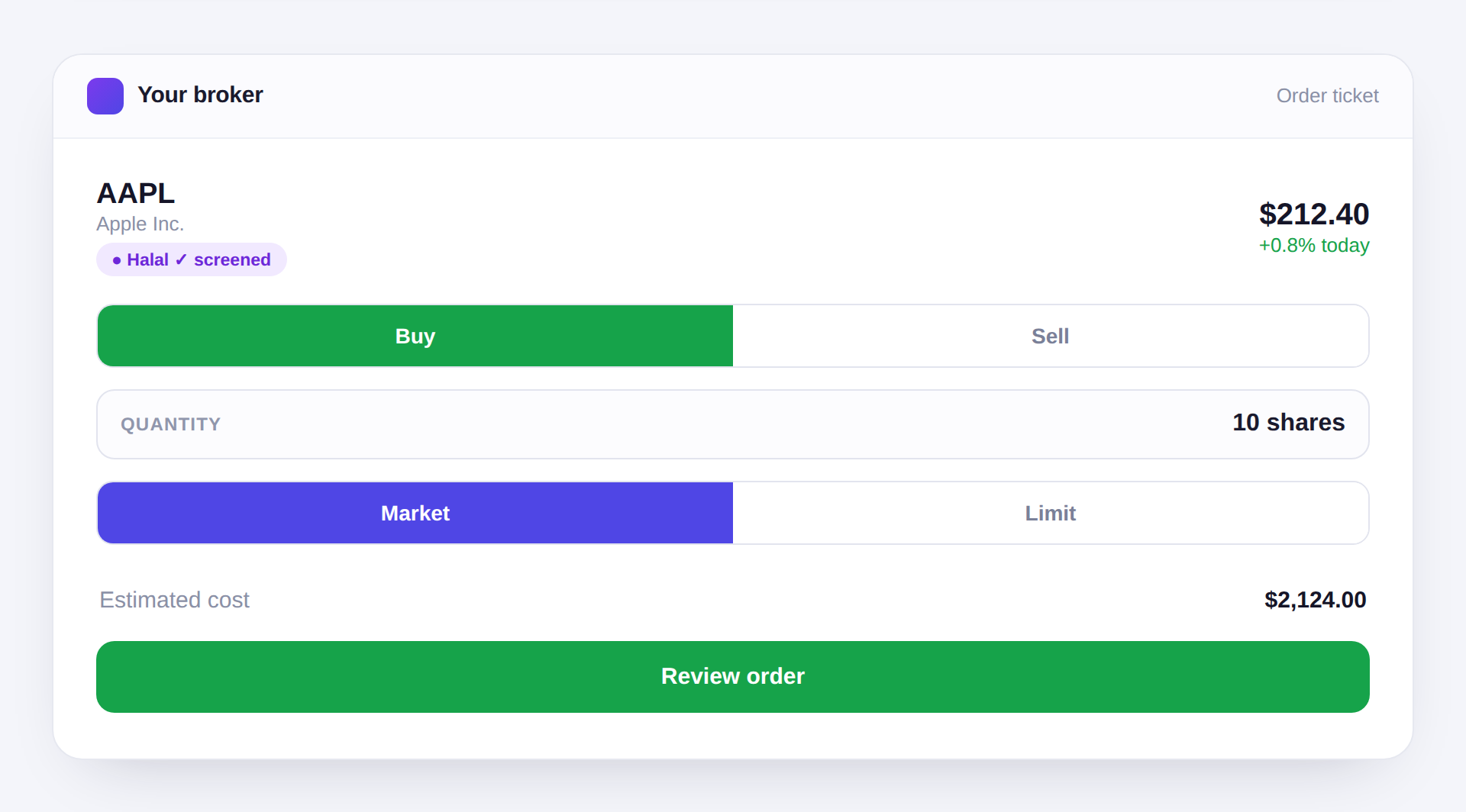
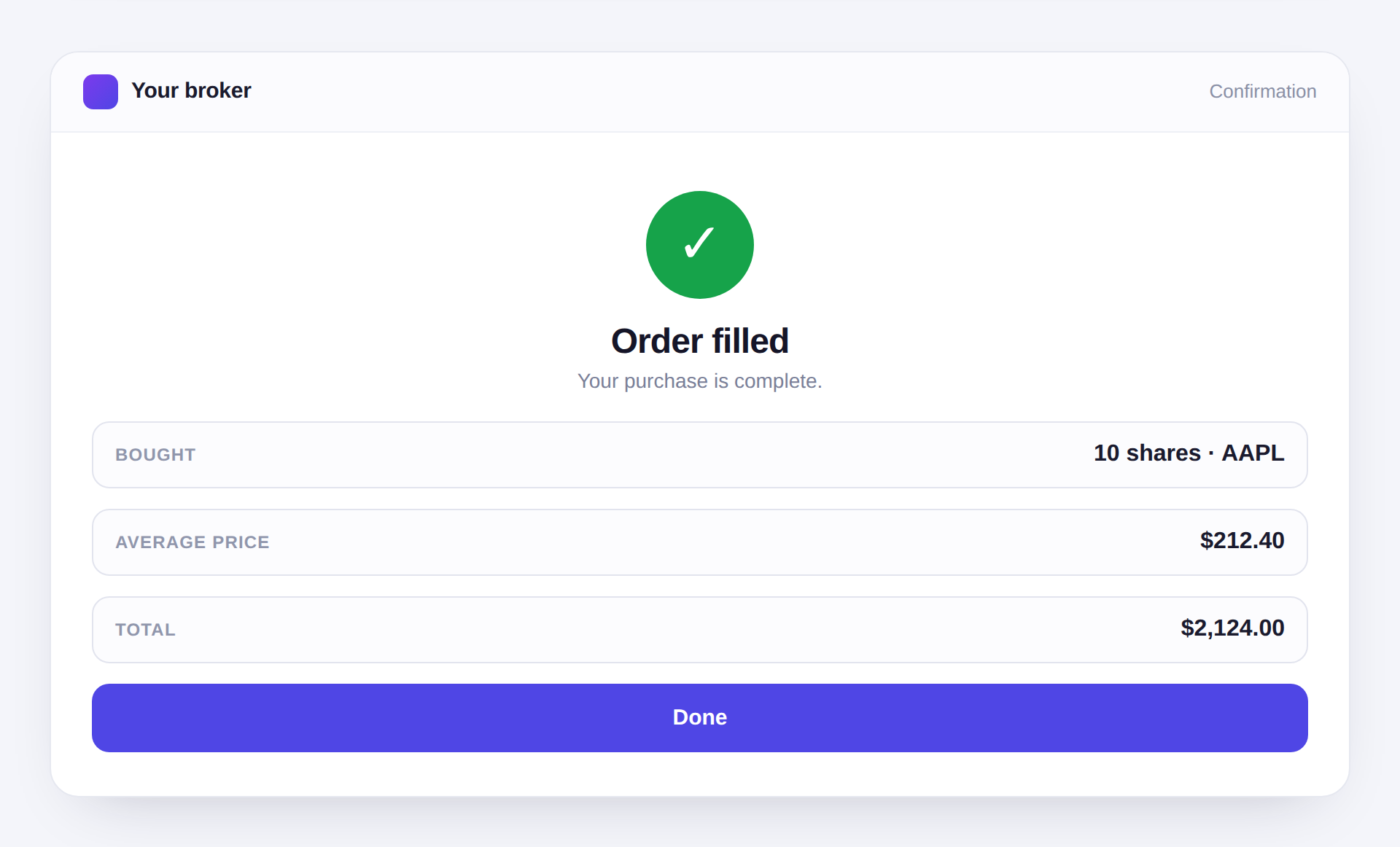
That's it, you now own the shares. Because you bought with your own settled cash and no leverage, the transaction stays within halal bounds.
Step 5: Track and purify
Owning the stock isn't the end. Two ongoing habits keep it clean. First, re-check compliance each quarter, since a company's ratios move and a halal stock can drift out of compliance. You can monitor this in one place with Akinda's My Portfolio, which tracks your holdings and their Shariah status in real time.
Second, purify the small amount of impure income that even compliant companies pass through their dividends by donating that portion to charity. The method is covered in the what is purification article. Do both consistently, and your investing stays halal well beyond the day you hit “buy.”
Frequently asked questions
Which broker is best for halal investing?
There's no single best broker; it depends on where you live and what you trade. Interactive Brokers offers the widest global market access, while Alpaca, Trading 212, and Webull are strong commission-free options with fractional shares. What matters more than the brand is opening a cash account and avoiding margin and interest features on any of them.
Do I need a special Islamic brokerage account?
Not necessarily. You can keep any mainstream brokerage halal by choosing a cash (non-margin) account and declining interest-bearing features. Some brokers offer dedicated Islamic or swap-free accounts, which handle this automatically, but a standard cash account configured correctly achieves the same result.
Is it halal to use a margin account if I don't borrow?
It's best avoided. Even if you don't actively borrow, a margin account is built around interest-based lending, and many charge interest on cash or lend out your shares. A plain cash account removes that risk entirely, which is why it's the recommended setup for halal investing.
Can I buy fractional halal shares?
Yes. Brokers like Alpaca, Trading 212, and Webull support fractional shares, letting you invest a fixed dollar amount even in expensive stocks. That makes it easy to build a diversified halal portfolio with a small budget. Just make sure each company you buy, whole share or fraction, has passed screening first.
Sources
AAOIFI Shari'ah Standard No. 21: Financial Paper (Shares and Bonds) – the screening criteria used to confirm a stock is halal before buying.
Fiqh Council of North America – ruling on investing in shares – confirms spot share ownership is permissible and margin is not.
Download the Akinda app Screen thousands of global stocks and monitor Shariah compliance in real time. 🌐 Website: akinda.io 📱 App: onelink.to/kpqkh6 |
Disclaimer
This article is for educational purposes only and is not financial or religious advice, and is not an endorsement of any broker. Broker features and availability vary by country and change over time; verify account types and terms before opening an account, and consult a qualified scholar for your situation.