
- Stock Market & Equities
Monthly Market Digest - MAY 2026
May 2026 Market Recap for Halal Investors: A Crowded Top in Tech, an Inflation Problem That Won't Quit
Table of Contents
- Introduction
- The Macro Picture: Records, but Narrow Ones
- April CPI Comes In Hot
- A New Fed Chair, but Not a Clean Break
- Nvidia's Quarter Was Big. The Reaction Was Smaller.
- SpaceX Files to Go Public in the Largest IPO Ever Attempted
- Dell's Beat and a Sharper Look at AI Capex
- Oil, the Strait of Hormuz, and the Aramco Dividend
- The Solar Move No One Was Expecting
- A PCE Print That Complicates Everything
- What This Month Means for Investors
- FAQ
Introduction
May 2026 has been shaping up as a strange month. The big U.S. indexes pushed back to highs even as the inflation data went the wrong way, even as a new Fed Chair took over after a contested confirmation, and even as the U.S.-Iran conflict continued to weigh on global energy supply. Most of the gains came from a handful of AI-linked names; the rest of the market was quieter than the headlines suggest.
This halal investing May 2026 market recap walks through the dates that actually mattered, the numbers behind them, and what the month might mean for a Shariah-compliant portfolio. Where exact figures are cited, the original source is linked inline. The aim is to give you enough to form your own view - not to tell you what to do with it.
The Macro Picture: Records, but Narrow Ones
By the end of May, the major U.S. indexes had pushed back to fresh highs. Coverage from CNBC placed the S&P 500 closing the month near 7,580 and the Nasdaq near 26,970, with the Dow finishing above 51,000. According to monthly performance data tracked by Amsflow, the S&P 500 returned roughly 4.25% in May.
The shape of those gains is what matters more than the headline number. Reporting from STL News suggests the S&P 500 technology sector was up roughly 15% in May, while many non-tech cyclical sectors were flat or modestly lower. The indexes look strong, but breadth was thin. Most stocks did not participate in the rally.
For halal investors, this is the practical takeaway: an index hitting records is not the same thing as a healthy market. If your portfolio has drifted heavier into AI names through pure price appreciation, May was probably a good month for the dollar value of your holdings - and a reasonable month to check whether your allocation still looks like the one you wrote down.
April CPI Comes In Hot
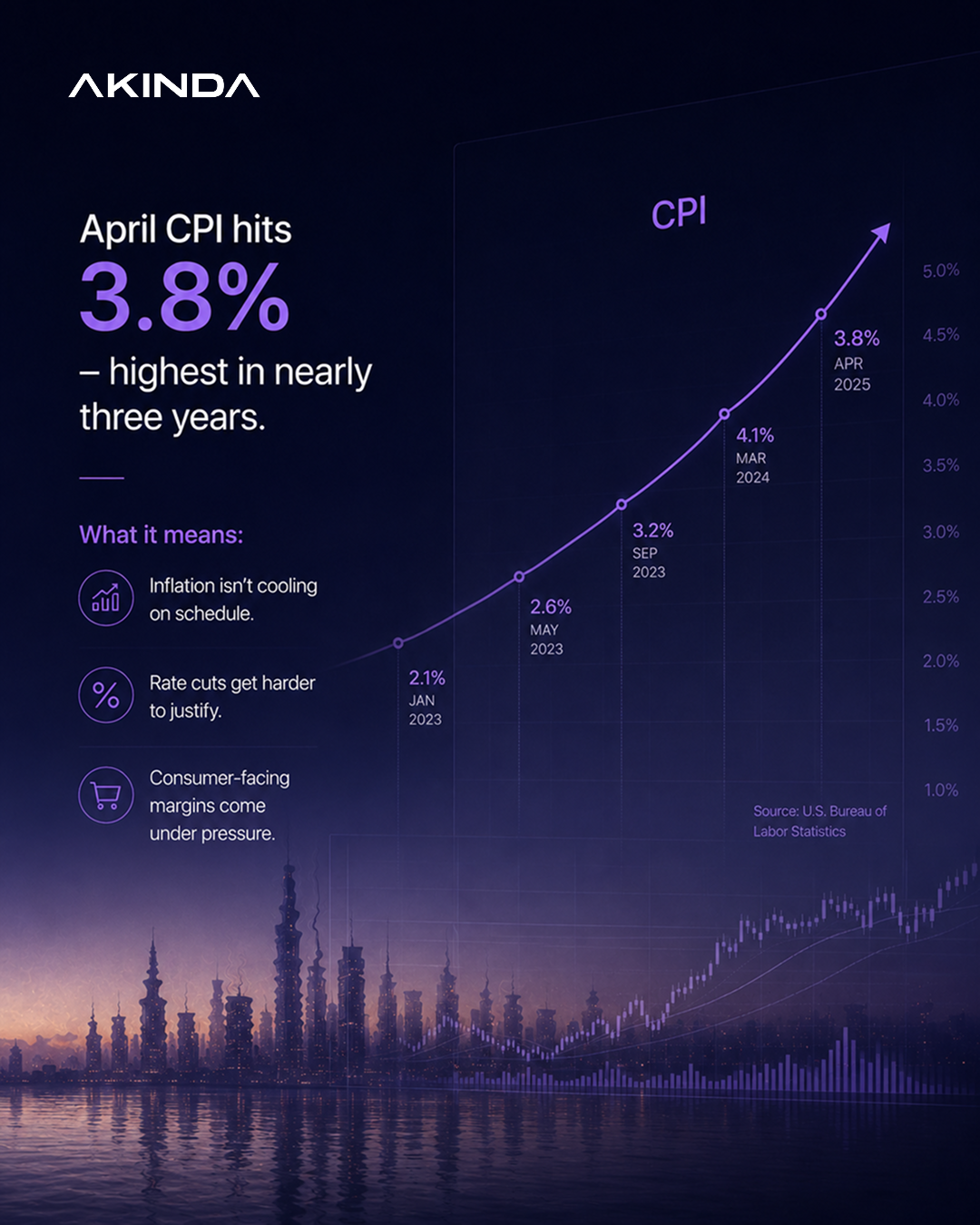
On Tuesday, May 12, the Bureau of Labor Statistics released April CPI data showing headline inflation up 0.6% month-over-month and 3.8% year-over-year. Core CPI, which strips out food and energy, rose 0.4% on the month and 2.8% on the year. Energy accounted for more than 40% of the headline gain.
Per CNBC's writeup, real average hourly wages slipped 0.5% on the month - meaning the typical worker lost purchasing power even before tax. Gasoline was up sharply on a year-over-year basis, which is consistent with the broader energy story still playing out in the Middle East.
Headline inflation at 3.8% is not catastrophic, but it is well above the Fed's 2% target and it complicates any case for near-term rate cuts. For halal portfolios that lean into consumer-facing businesses, the question to ask is which companies can pass cost increases through to customers without losing volume and which cannot.
A New Fed Chair, but Not a Clean Break
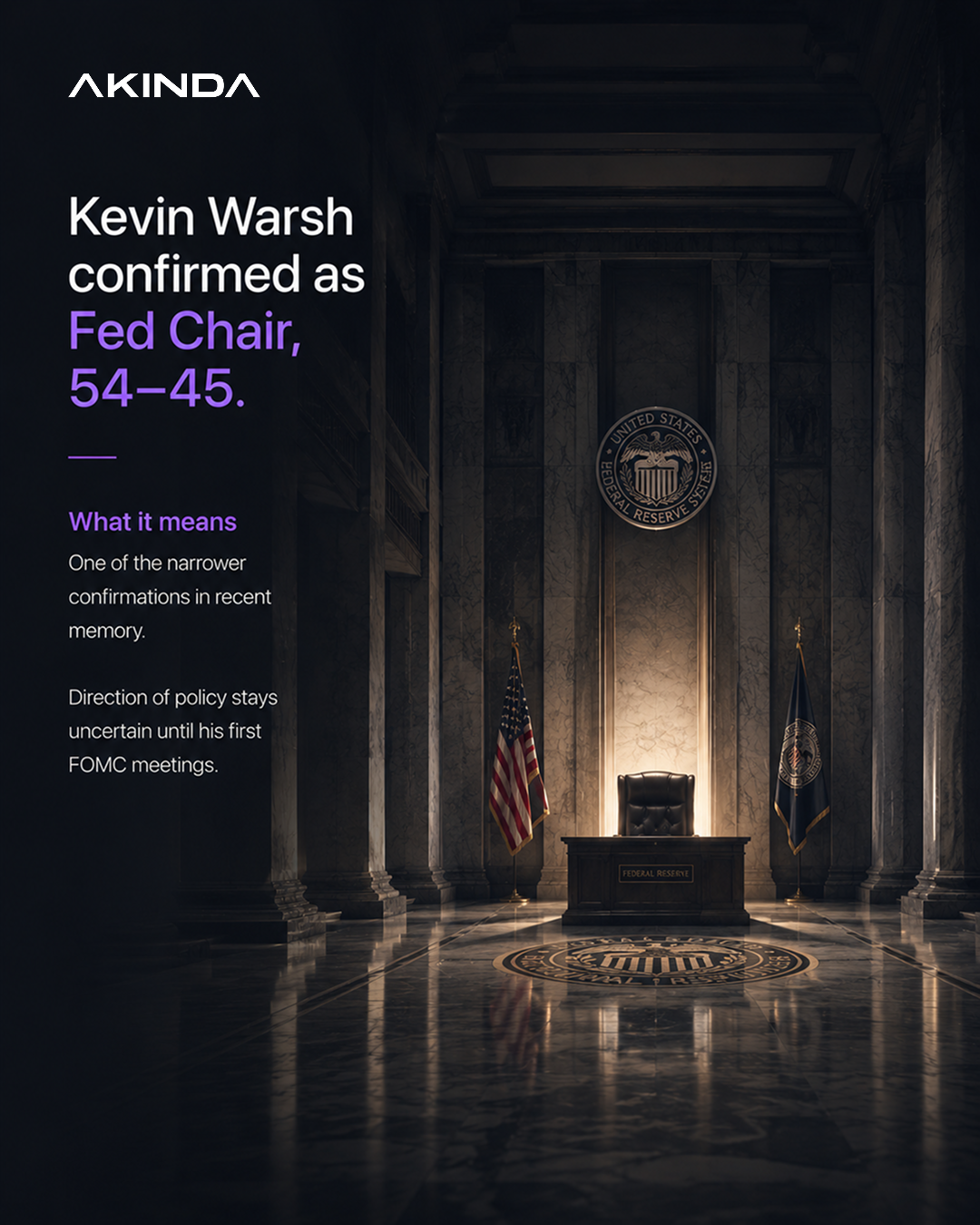
On Wednesday, May 13, the U.S. Senate confirmed Kevin Warsh as the next Chair of the Federal Reserve. The official Senate roll call recorded the vote at 54-45 - one of the narrower confirmation votes for a Fed Chair in recent memory. NPR reported that the vote came mostly along party lines, with the confirmation delayed for months by a Justice Department inquiry linked to the Fed.
Jerome Powell's term as Chair ended on Friday, May 15. The Fed's own press release that evening named him chair pro tempore until Warsh was sworn in, which Congressional records indicate happened on May 22.
Instead of stepping away from the Fed entirely, Powell stayed on as a governor, which means he still keeps a vote on the FOMC for the next two years. That continuity matters. It lowers the chances of a sudden shift in monetary policy just because a new Chair took over. Warsh may now lead the Fed, but decisions will still be shaped by the broader committee rather than one person alone.
Warsh's track record is mixed. He served as a Fed governor from 2006 to 2011 and was historically considered hawkish, though he has signaled more openness to rate cuts in recent years. Whether he actually pushes the committee in that direction - especially with inflation still above target - is the question to watch over the next three FOMC meetings.
Nvidia's Quarter Was Big. The Reaction Was Smaller.
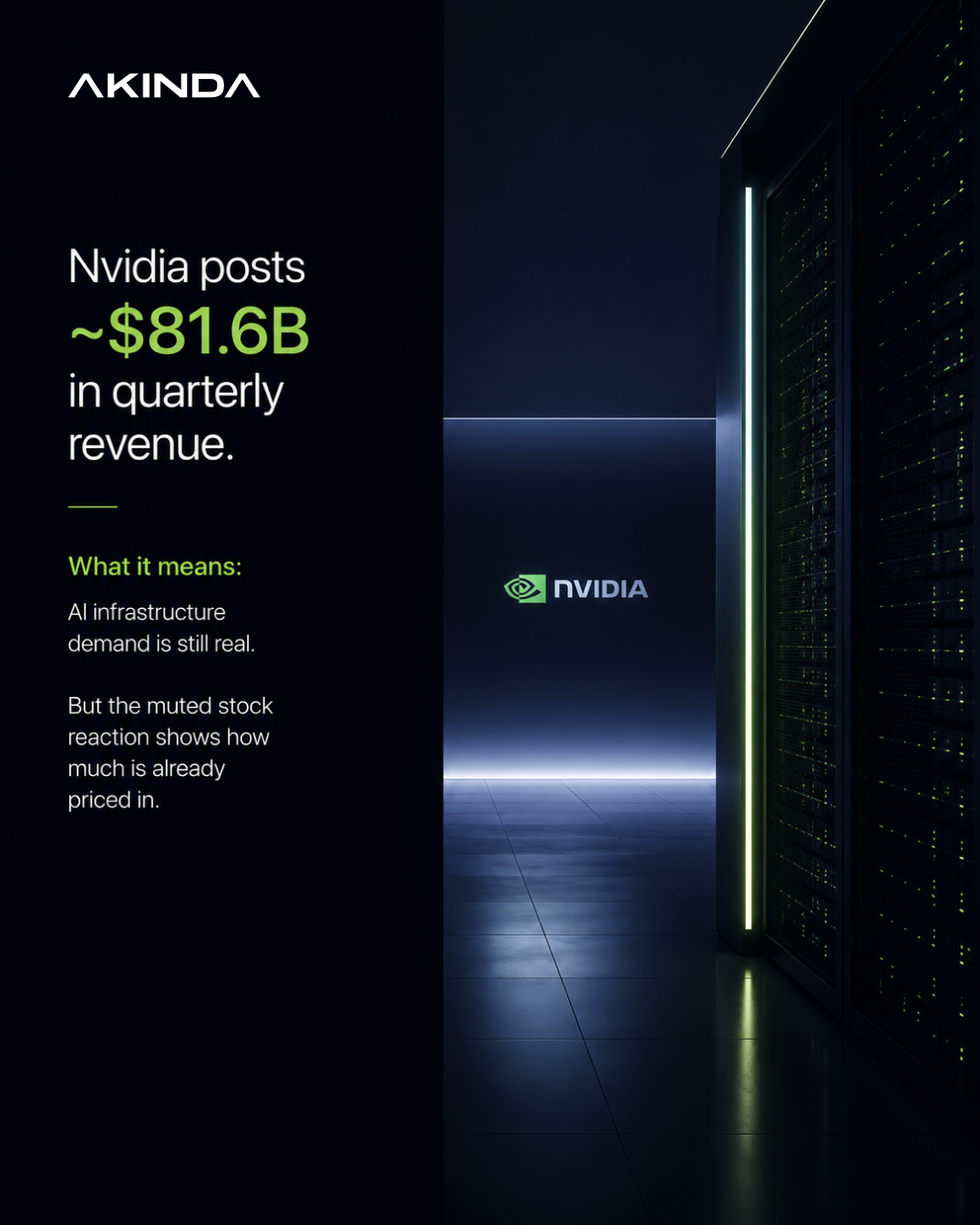
After the close on Wednesday, May 20, Nvidia reported fiscal Q1 2027 results. According to multiple analyst summaries of the report, revenue came in around $81.6 billion, up roughly 85% year-over-year, with adjusted EPS near $1.87 - beating consensus on both lines. Data-center revenue alone was reported around $39 billion.
The market reaction is what was interesting. Despite the size of the beat, the stock did not rally aggressively in the aftermath. Coverage attributed this to positioning: shares had run up into the print, the multiple was already elevated, and "buy the rumor, sell the news" took over. When a company can grow 85% year-over-year and the stock still hesitates, valuation has already done a lot of the work.
Nvidia generally passes the most widely used Shariah screens on business activity, though its classification can shift quarterly depending on debt and non-permissible income ratios. For halal investors holding it, the more useful question is whether the AI infrastructure thesis still has runway, or whether the easy money has already been made.
SpaceX Files to Go Public in the Largest IPO Ever Attempted
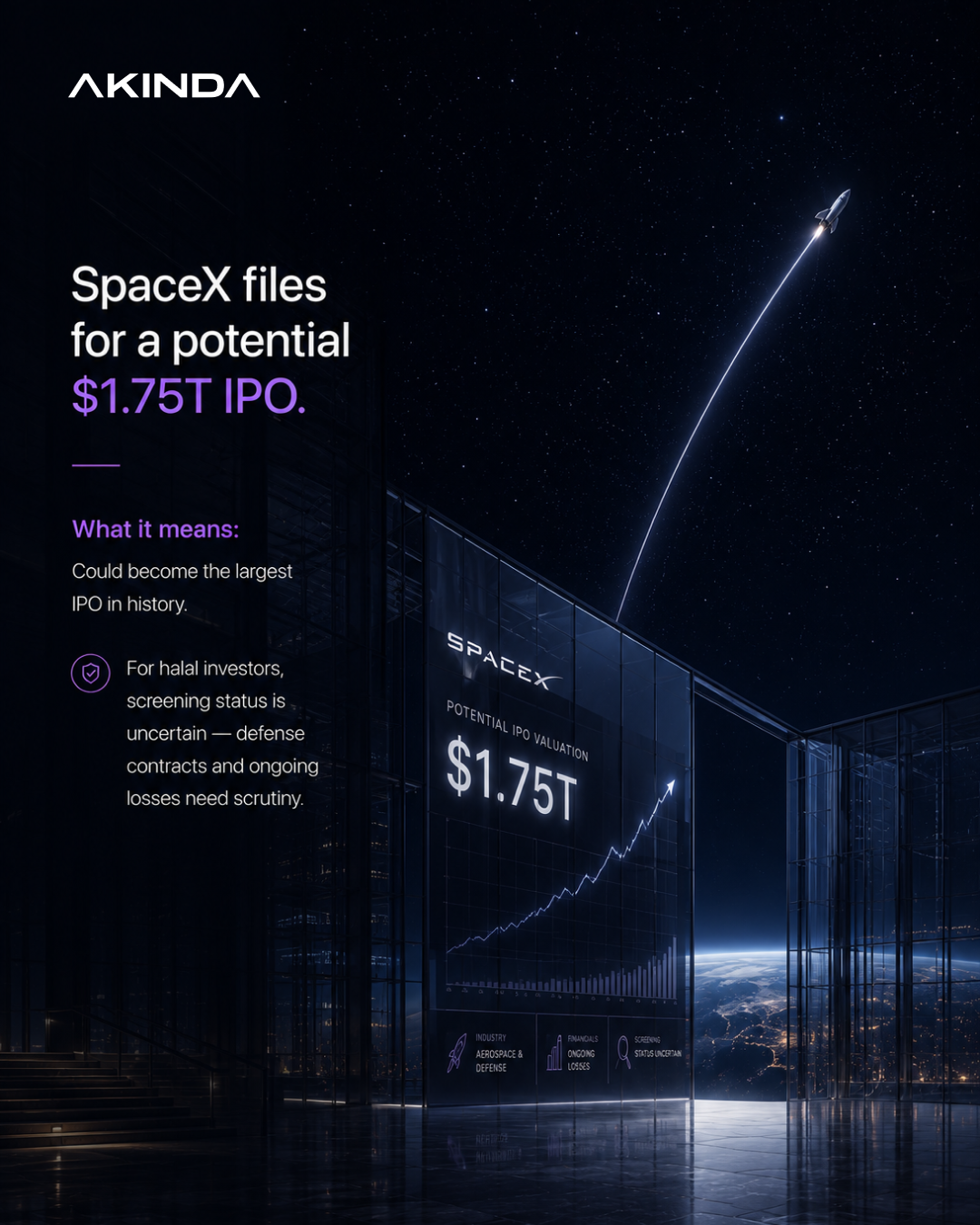
The same day Nvidia reported, SpaceX filed its public S-1 prospectus with the SEC - the first time outsiders have been able to read the company’s actual financials. The plan, per multiple reports, is to list on the Nasdaq under the ticker SPCX, with a roadshow in early June, pricing targeted around June 11, and a first trading day around June 12. SpaceX is reportedly seeking to raise up to $75 billion at a valuation of roughly $1.75 trillion to $2 trillion. If it prices anywhere near that, it would be the largest IPO in history by a wide margin -y6h surpassing Saudi Aramco’s 2019 record of $29.4 billion raised.
The S-1 splits the company into three segments - Space (launch and Starship), Connectivity (Starlink), and AI (xAI, which SpaceX merged with in February 2026). As one teardown of the filing notes, only the Connectivity segment is profitable today - Starlink, which grew revenue close to 50% year-over-year and crossed 10 million subscribers. The Space and AI segments are still loss-making, and the company posted a sizable net loss in Q1 2026. The headline valuation, in other words, rests on one profitable business and two expensive bets.
For halal investors the SPCX listing is worth watching closely, but with two real cautions. First, valuation: a $1.75 trillion price tag works out to roughly 110 times trailing revenue, an extraordinary multiple that leaves almost no room for disappointment, and a thin initial float of only a few percent of shares is likely to make the stock highly volatile in its first sessions. Second, Shariah screening: SpaceX is not yet classifiable because there are no public financials to screen on a settled basis, and any debt-to-assets and non-permissible-income ratios will need to be checked against the final prospectus once it lists. A high-profile IPO is exciting, but a Shariah-compliant investor cannot screen a story, only a balance sheet. The right posture here is patience: let the stock trade, let the screens update, and verify status through your own tool before committing capital.
Dell's Beat and a Sharper Look at AI Capex
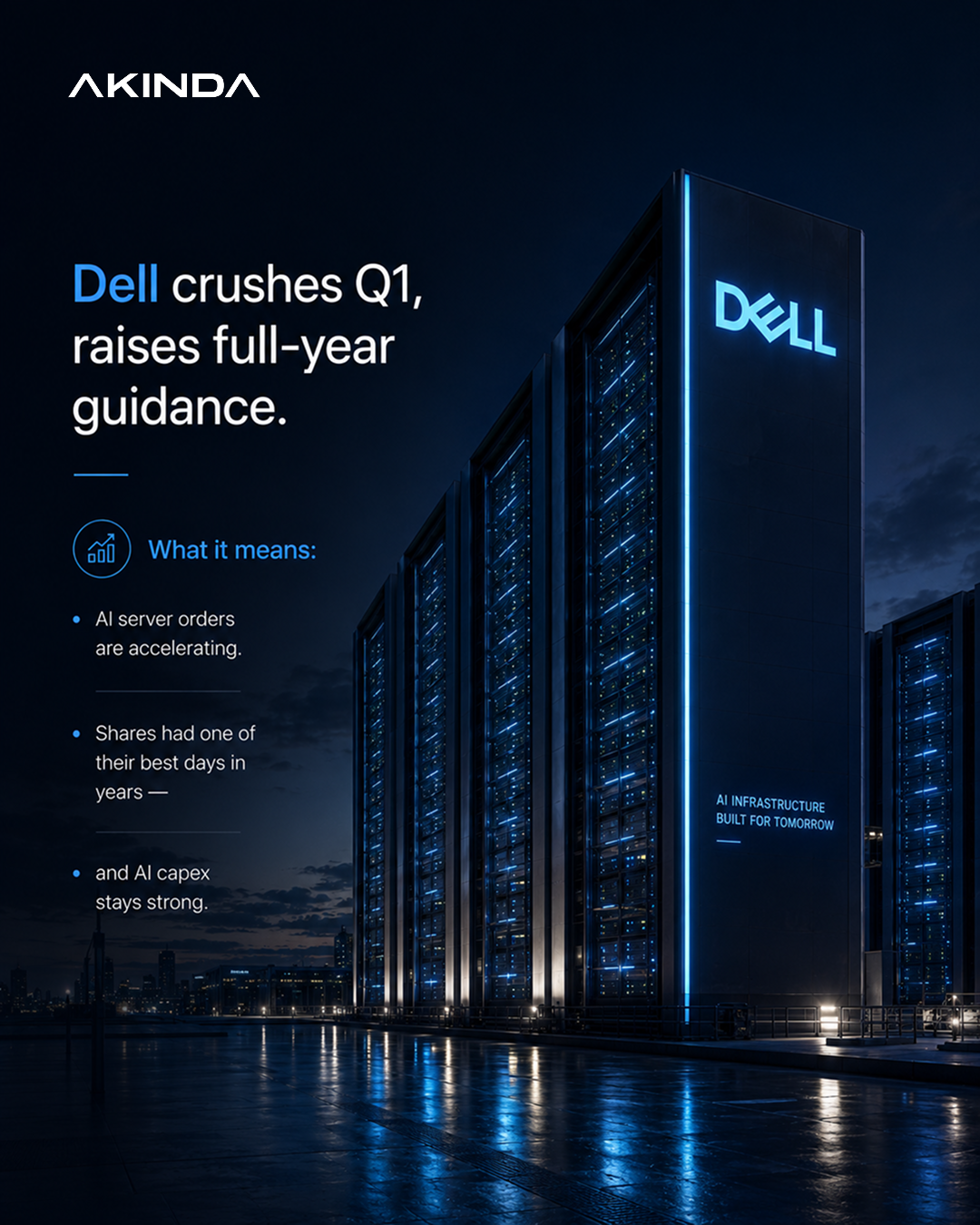
After the close on Thursday, May 28, Dell Technologies reported fiscal Q1 2027 results that came in well above consensus: revenue near $43.84 billion versus the roughly $35.4 billion expected, with adjusted EPS of $4.86 against an estimate near $2.94. Per Benzinga's segment breakdown, AI-optimized server revenue was the standout, growing several hundred percent year-over-year off a smaller base. Management raised full-year guidance meaningfully.
Shares had one of their strongest single-day gains in years on Friday, May 29 - reportedly around 33% intraday - and the stock has been one of the better-performing large caps year-to-date. The thesis here is straightforward: hyperscaler and enterprise spending on GPU servers is still real, still accelerating, and still showing up in actual revenue rather than just backlog.
The caution worth keeping in mind: gross margins on the AI server mix sit well below Dell's traditional businesses. Growth at this scale is coming with lower margin per dollar of revenue. That tradeoff is acceptable when demand is overwhelming, but it can pressure earnings quickly if order growth slows.
Oil, the Strait of Hormuz, and the Aramco Dividend
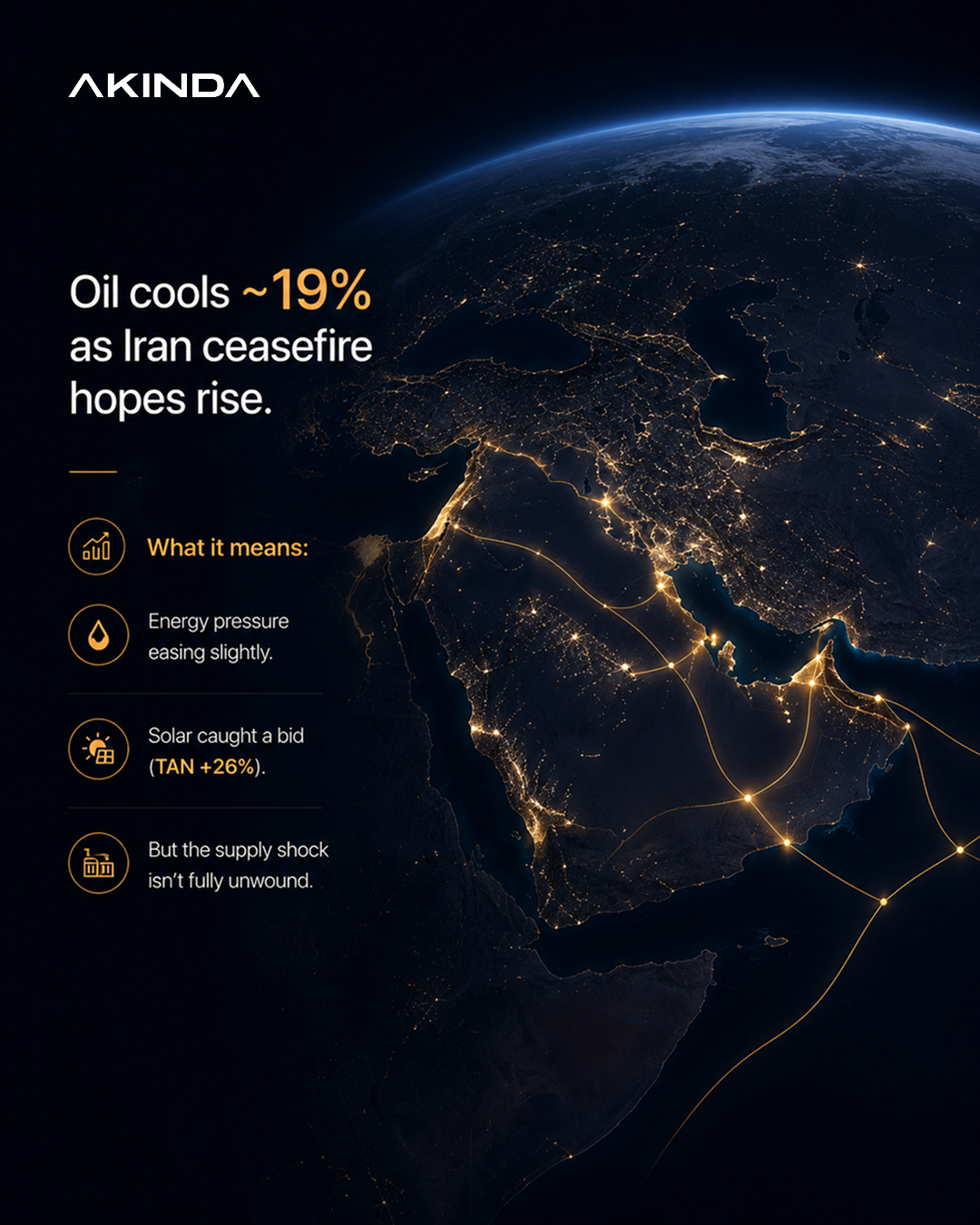
The U.S.-Iran conflict that began in late February - and the closure of the Strait of Hormuz that followed in early March - continued to shape energy markets through May. But May was also when oil cooled. CNBC reported that Brent crude finished the month near $92 a barrel, down roughly 19% on the month, with WTI near $87 - both well off their 2026 peaks but still significantly above pre-conflict levels.
The pullback reflected reported progress on a U.S.-Iran ceasefire framework. The IEA's May 2026 Oil Market Report described the broader supply situation as one of the largest disruptions in the history of the oil market, with cumulative Gulf supply losses exceeding 1 billion barrels by the time of writing. A ceasefire would not fully reverse that overnight.
On the corporate side, Saudi Aramco announced on May 10 a Q1 base dividend of roughly SAR 82 billion (about $21.9 billion), payable in early June. Aramco's investor page notes the Q1 base dividend is up about 3.5% year-over-year.
For halal investors who hold energy exposure directly or through Shariah-compliant ETFs, the message from May is that the worst of the oil shock may be unwinding - but the structural setup is not back to where it was. A partial reopening of the Strait is not the same as full normalization, and infrastructure damage tends to take longer to repair than negotiations to conclude.
The Solar Move No One Was Expecting
One of the more surprising stories of the month was solar. Per CNBC, the Invesco Solar ETF (TAN) was tracking gains of around 26% in May - its strongest month in over a decade. Individual names within the basket moved much more, with some up triple digits on the month.
Part of the move reflected a broader strategic re-rating: when conventional energy supply is at risk for geopolitical reasons, alternatives suddenly look more attractive even when their underlying unit economics have not actually changed. That kind of move can persist or unwind quickly depending on how the conflict resolves.
Solar names generally screen better for Shariah compliance than traditional oil majors because they tend to carry less interest-bearing debt as a share of their balance sheets. A diversified ETF gives you exposure to the theme without depending on any single company; chasing a stock that just doubled in a month is a different decision entirely.
A PCE Print That Complicates Everything
On Thursday, May 28, the Commerce Department released April PCE data - the Fed's preferred inflation gauge. CBS News covered the report and noted headline PCE rose 3.8% year-over-year, the highest since May 2023, with core PCE at 3.3%. This was the first major inflation print to land in the new Fed Chair's inbox.
CBS reported that CME FedWatch data showed the implied probability of a rate hike at the Fed's December meeting jumped to around 40%, up from near zero earlier in the year. Annual personal income growth slowed below the inflation rate - households are losing real purchasing power in aggregate.
Two inflation readings in the same month showing year-over-year prints at multi-year highs is harder to dismiss than a single hot data point. If the trend continues into June, the Fed may have to choose between protecting growth and protecting its credibility. Either choice has real implications for how long-duration assets get valued.
What This Month Means for Investors
A few honest takeaways without the dramatization:
- Concentration risk is not theoretical. Tech up sharply while most other sectors went sideways means a typical "diversified" portfolio may be less diversified than it looks. If the AI names roll over, the indexes will follow.
- Inflation is not done. CPI and PCE both printed at multi-year highs in the same month. Strategies built on the assumption of a smooth glide back to 2% may need revisiting.
- Earnings are doing the work, but expensively. Nvidia and Dell delivered real numbers, not just narrative. But multiples are pricing in continued execution, which leaves little margin for disappointment.
- Geopolitics now matters structurally. The Middle East conflict has reshaped energy, currency, and commodity markets. Halal portfolios cannot ignore commodity exposure even if the core allocation is U.S. equities.
- The biggest move of the month was the quietest one. Powell choosing to stay on the Fed Board reduces the risk of a sudden policy regime change. Continuity tends to favor patient, long-horizon investors, which is most halal strategies, structurally.
The broader point: in a month full of headlines, the goal is to figure out which ones change the underlying setup and which are just noise. Records hide as much as they reveal.
FAQ
Was May 2026 a good month for halal investors?
On the surface, yes - the S&P 500 returned around 4% and the Nasdaq gained meaningfully more. But the rally was concentrated in tech and AI infrastructure. Investors with broad-based or value-tilted portfolios likely participated less than the index numbers suggest.
Does Nvidia pass Shariah screening?
Nvidia generally passes the most widely used Shariah screens, with semiconductors and AI hardware classified as permissible business activity. That said, screening status can change quarterly depending on debt levels, non-permissible income ratios, and the screening platform's methodology. Always verify current status through your own screening tool before purchase.
Is the new Fed Chair good or bad for stocks?
Markets prefer continuity and clarity. Warsh's lean is nuanced - historically hawkish, more recently open to cuts. The honest answer is that direction will be visible only after his first two or three FOMC meetings. Powell's decision to stay on the Board further reduces the risk of a sharp policy shift in either direction.
Should I worry about 3.8% inflation?
For long-horizon halal investors building wealth over a decade or more, individual monthly inflation prints are noise. What matters is whether real returns, after inflation, on a diversified portfolio stay positive over time. Historically, equities have outpaced inflation over long periods, but valuations and entry points still matter.
Is Saudi Aramco Shariah-compliant?
Aramco is generally treated as Shariah-compliant by the major screening platforms, with energy production as a permissible business activity. Screening classifications can change, so verification through your platform of choice before purchase is the standard practice.
What should I watch in June 2026?
The May CPI release scheduled for June 10 will be a critical read on whether the April inflation jumps were a one-month spike or the start of a trend. The new Fed Chair's first press conference, the trajectory of the U.S.-Iran ceasefire framework, and Q2 guidance from AI infrastructure names are also worth watching.
Disclaimer
This article is for educational purposes only and does not constitute investment, tax, or legal advice. All data points are sourced from publicly available reports linked inline. Shariah compliance status of individual securities can change over time and should be independently verified before any investment decision. Past performance does not guarantee future results.
You may also like
- What Is Halal Investing? The Complete Beginner's Guide (2026)
How to start halal investing from 0 in 2026 - Is Trading Halal? A Beginner's Guide to Halal Trading
Akinda Features Explained: How to Use the Platform for Halal Investing - Halal Stock Screener: How to Check Any Stock in 30 Seconds (Free)
- How to Find Top Halal Stocks on Akinda (Step-by-Step Guide)
Download the Akinda app and screen stocks instantly for free
🌐 Website: https://akinda.io
📱 App: https://onelink.to/kpqkh6